
Drip Check · 12 October 2026
Drip Check 03: Quentin Monge, the Riviera in flat colour
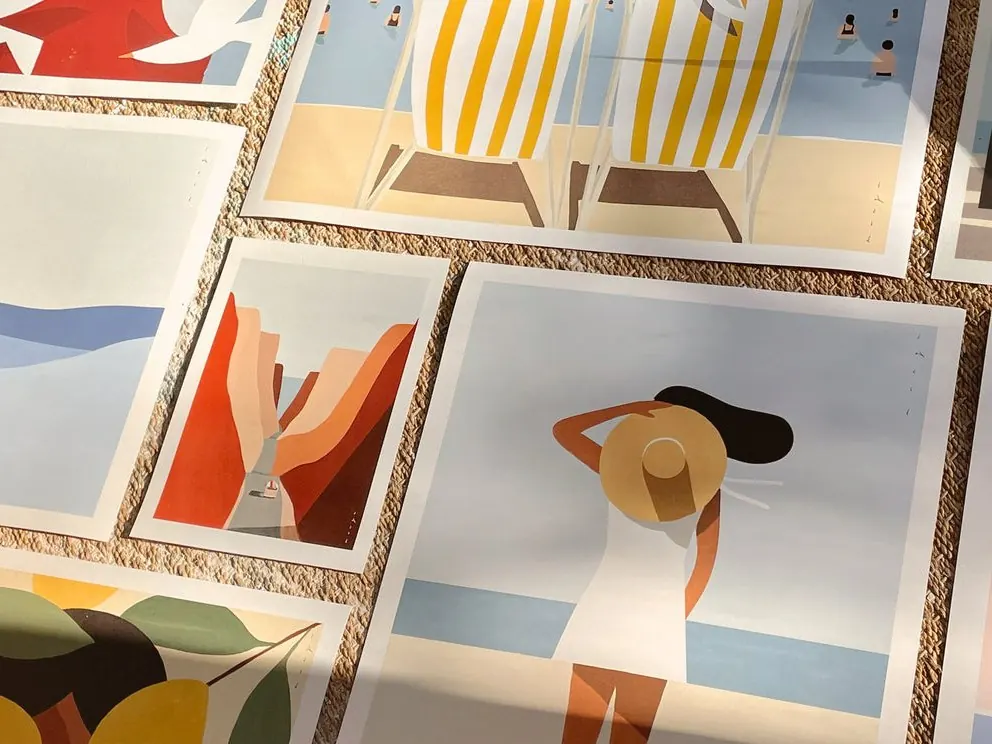
Quentin Monge paints the French Riviera down to four or five flat colours, and it still reads as a whole afternoon.
The work
Quentin Monge is a French illustrator and painter who grew up in Provence. After years working in London and Paris he moved back to the south of France, where he now lives with his family and works from a studio in a Mediterranean forest near the Gulf of Saint-Tropez. His paintings and prints return again and again to the Riviera: beach chairs, swimmers, sailboats, canyon roads and citrus trees, built from soft, flat colour fields rather than line and shading. He points to Henri Matisse, Pablo Picasso and André Derain as reference points and carries their fluid cut-out shapes into a contemporary, commercial practice. His clients include Apple, Hermès, Airbnb, Vespa and The Wall Street Journal.
“I often say that my first memory of drawing was on the sand of Saint-Tropez’s beach, in the wet sand where the sea meets the shore,” he writes on his studio page.
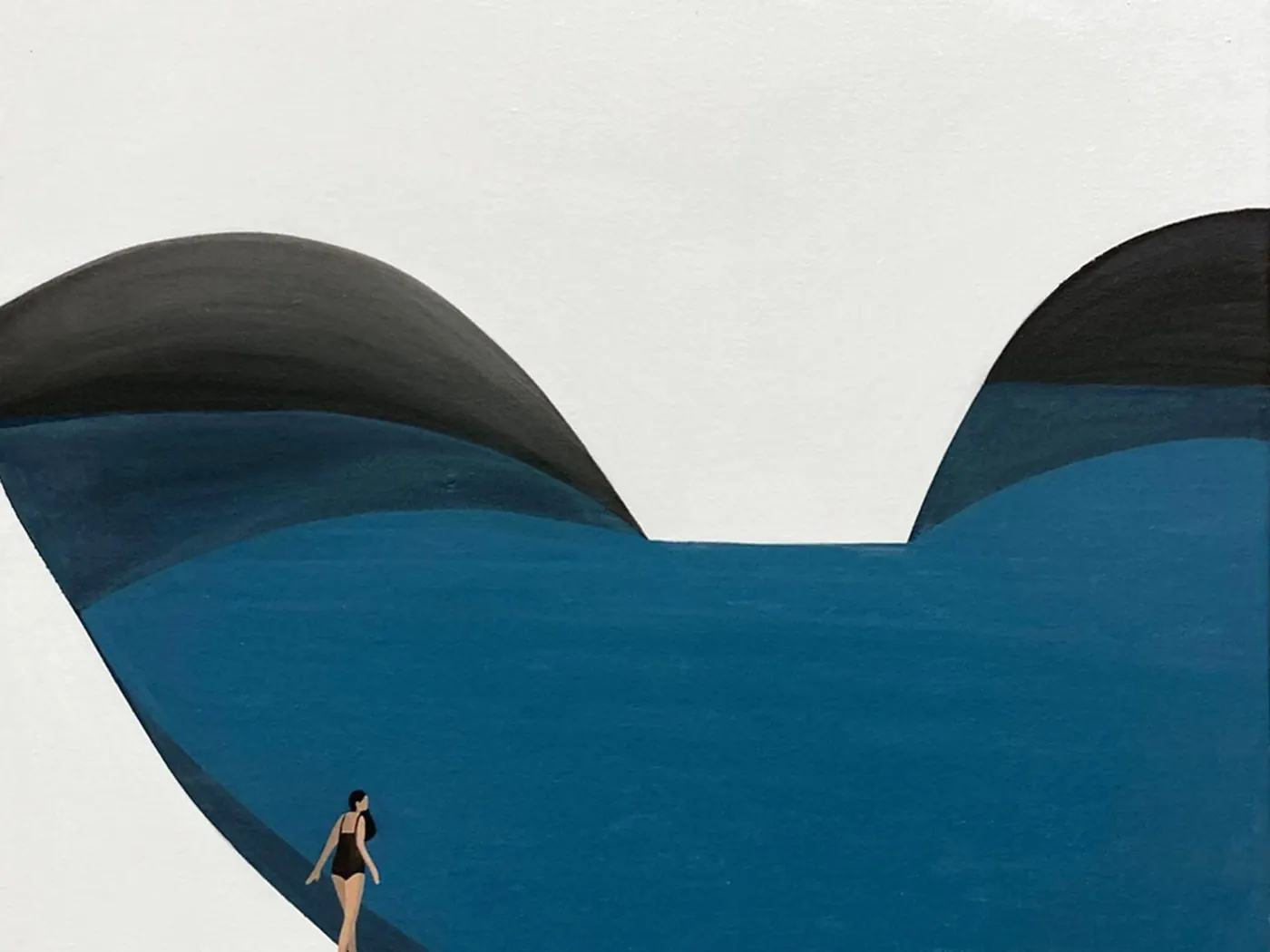 © Quentin Monge. Source: ignant.com
What we see as makers
A palette of five colours can carry a whole scene. Monge rarely mixes more than a handful of flat hues per piece: sand, sea blue, a stripe of yellow, one shadow brown. For a tufter choosing yarn, that is permission to leave colours out rather than add them in.
Shadows are shapes, not gradients. His beach chairs and figures carry one flat shadow colour with a hard edge, never a blend. It is the same decision a tufter makes with the shears: a shadow is its own patch of pile, not a fade between two yarns.
Repetition at different scales fills a composition. He often lines up near-identical motifs, chairs, umbrellas, archways, at slightly different sizes. A single tufted panel can borrow that trick by repeating one shape across the field instead of inventing a new one for every row.
The drip connection
Monge keeps his colour inside hard, still borders. Every shape stays locked to its outline. Jan Fechner’s drip tufting, developed at BUBU Studio, works the opposite way: he lets wool bleed across its edge on purpose, so one colour runs into the next before the gun moves on. Put a Monge print next to a drip piece from the studio and the lesson is clear. Both start from a small set of flat colours. One holds them still, the other lets them move.
Curious how far a colour can run before it settles into shape? Book a session in Paphos.
Sources: Devid Gualandris, “Quentin Monge’s Artistry Is Inspired by the Color Palette of the French Riviera”, Ignant, 21 October 2020, ignant.com. Artist studio bio, quentinmonge.com/pages/about.
Try it with yarn in your hands.
Tufting workshops in Paphos, every week.