
Drip Check · 17 October 2026
Drip Check 07: Kindah Khalidy, deciding when a painting is done
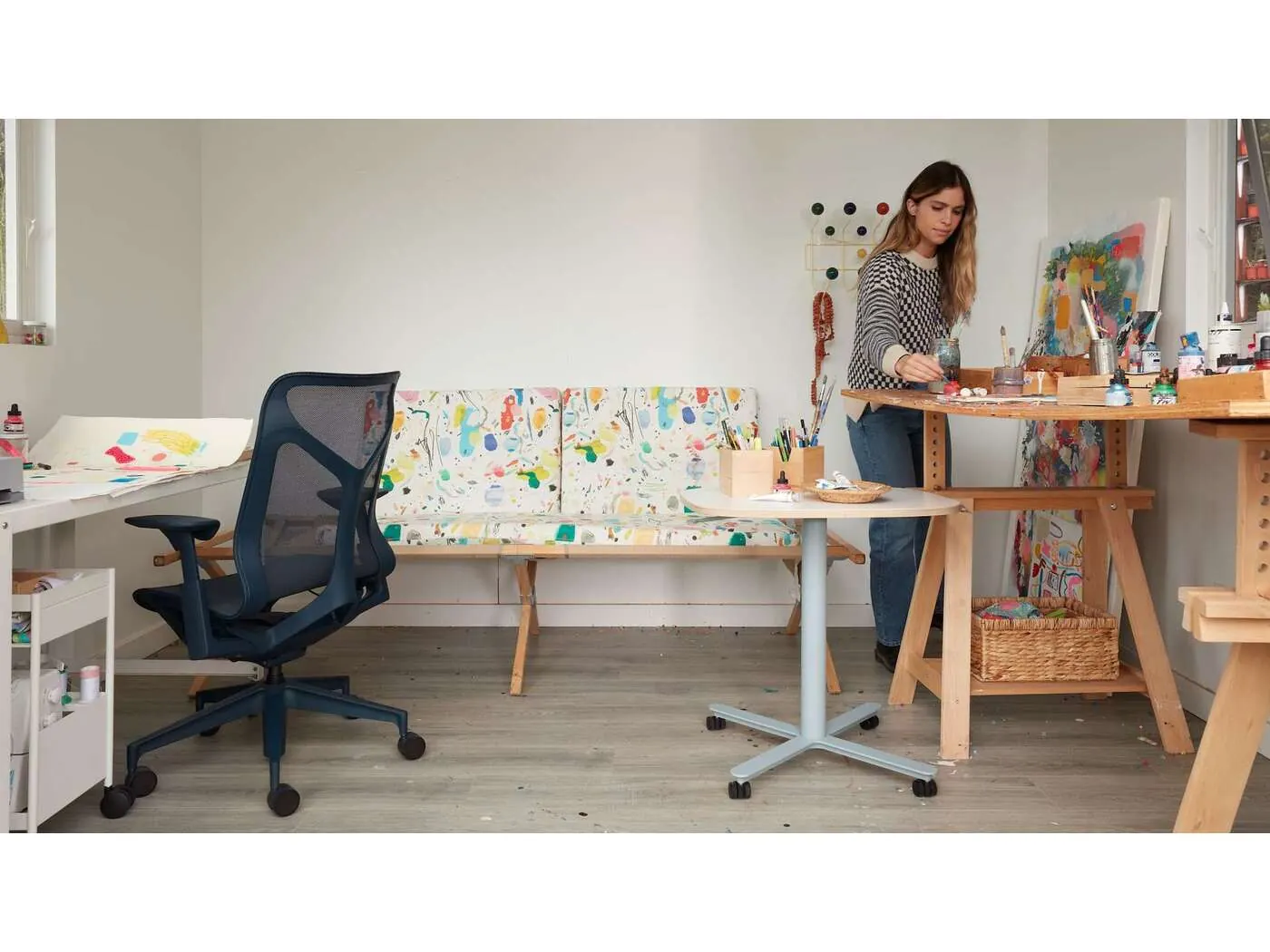
Kindah Khalidy will let a single painting sit unfinished for months, sometimes years, before she decides it is done.
The work
Khalidy is a California-based painter, author and textile designer. She studied at California College of the Arts in San Francisco and chose to commit to art full time around 2009, after years of deliberately keeping other jobs so her painting would not have to pay the bills. She worked for years out of a converted garage at her Mission District home in San Francisco before moving, by 2024, into a larger studio in Berkeley, a space she got after designing a bottle label for the distillery next door.
Her canvases often run five or six feet wide and take time because she works without a fixed plan, moving a piece between walls for months while she works out which direction to keep. “Within each painting there are thousands of versions of it, different ways it can go,” she says. She also runs the textile line Seamripper and has painted patterns for Vans, Nordstrom, Joann, Crate and Kids and Gorman, plus a one-of-a-kind Herman Miller lamp.
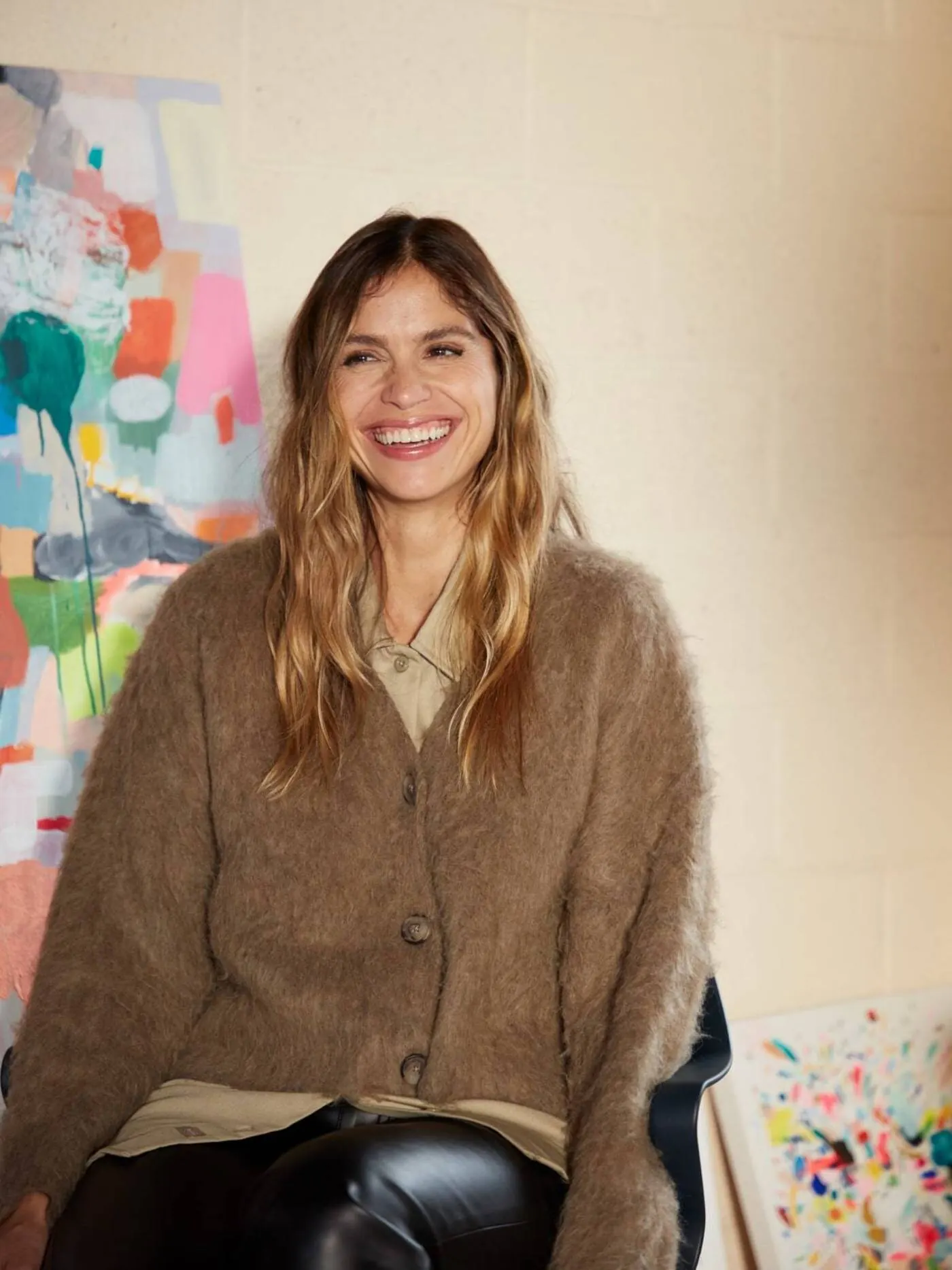 © Kindah Khalidy. Photo: Mariko Reed. Source: hermanmiller.com
What we see as makers
Not sketching is a discipline, not a shortcut. “I try not to pre-plan anything,” she says. “I’m trying to get better at drawing, better at lines, so I don’t have to sketch at all.” That trains the hand through repetition rather than avoiding the work. A tufter can borrow the approach: cut fewer templates on purpose and let the gun’s own path get steadier over time instead of leaning on a stencil forever.
A piece can hold a thousand directions and still only need one ending. Khalidy keeps unfinished canvases in view for months rather than forcing a decision on day one. On a tufted panel the same move means leaving a design pinned up for a few days before cutting pile, instead of locking in the first idea that goes down.
What stays sacred to the art is not automatically what goes into the product. She keeps some painted shapes out of her repeating textile patterns on purpose: “Some blobs just have to live on the canvas.” A tufter selling smaller pieces cut from one large design can set the same rule ahead of time, deciding which motifs are one-offs and which get repeated.
The drip connection
When Khalidy painted a one-of-a-kind Nelson Bubble Lamp for Herman Miller, she let a few drips run down the translucent shade rather than wiping them away. “I like leaving some here and there, a mix of accidental and intentional,” she said of it. Jan Fechner’s drip tufting, developed at BUBU Studio, comes from the same instinct, except the mixing happens while the wool is still leaving the gun: he lets one colour run into the next as he moves, rather than fixing the border first. Khalidy decides which drips to keep after the paint has already settled. Jan decides in the same motion that makes them.
Want to see what a drip looks like before you decide whether to keep it? Book a session in Paphos.
Sources: William Bostwick, “An interview with artist Kindah Khalidy”, Herman Miller, 19 April 2024, hermanmiller.com, photography by Mariko Reed. “Bright Delight: In the Studio with Kindah Khalidy”, 20x200, 11 March 2017, 20x200.com. Artist website, kindahkhalidy.com/about.
Try it with yarn in your hands.
Tufting workshops in Paphos, every week.