
Drip Check · 20 October 2026
Drip Check 10: Anna Blatman, paintings built to be touched
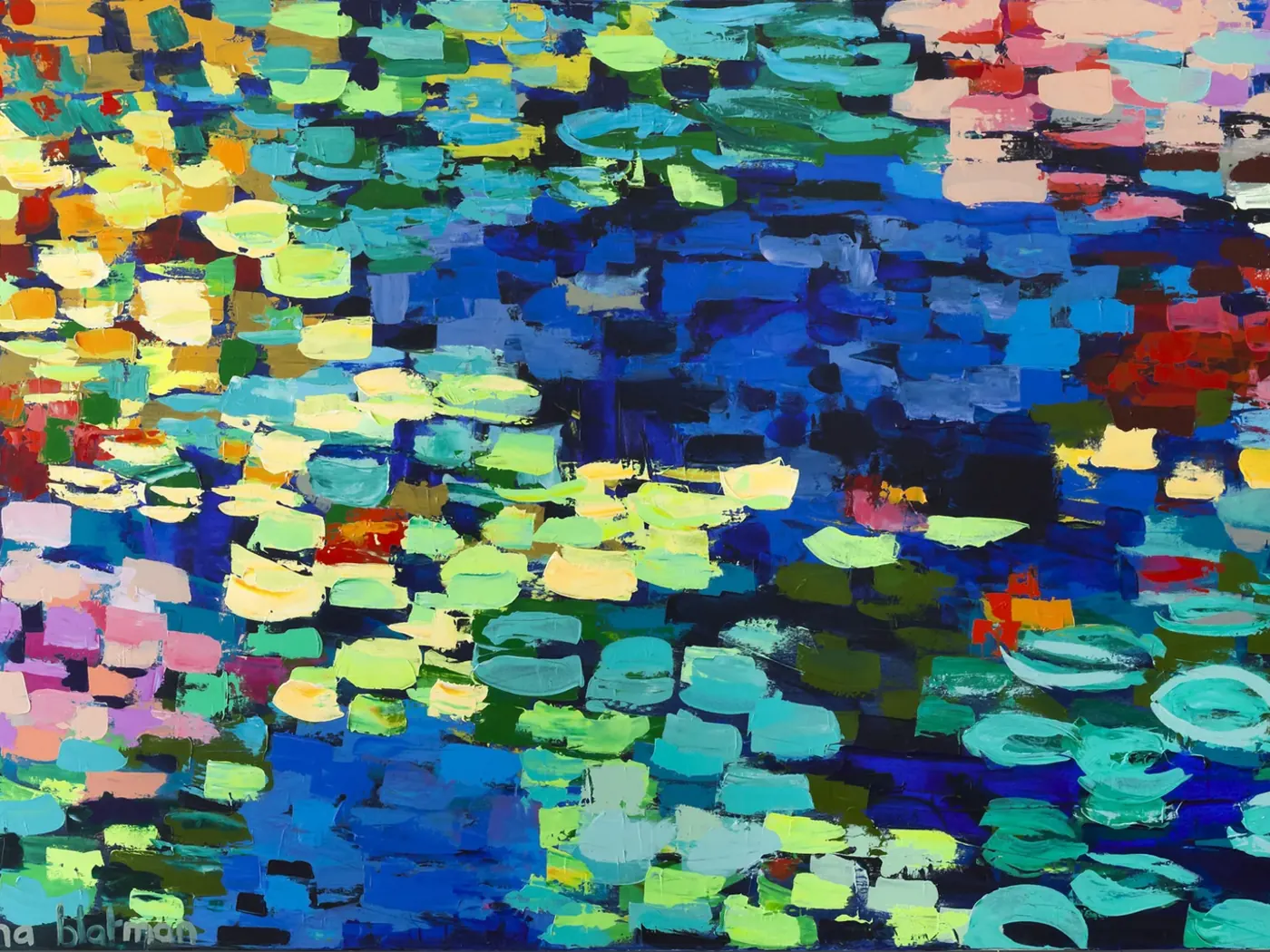
Anna Blatman builds her paintings up so thick that kids walk into her gallery and reach out to touch them, and she lets them.
The work
Blatman was born in Melbourne in August 1965 and has no formal art school training. She took lessons with a local artist in 1990 and, in her own words, “knew I loved colour and off I went to pursue my passion.” Her first show came a year later at the Herald Sun art exhibition in the Treasury Gardens, then a decade of selling at Melbourne craft markets. Since 1997 she has painted from her own gallery studio in Elsternwick, Melbourne.
Her subjects stay close to home: garden flowers, birds, foxes, snails, built in oils or acrylics with a palette knife, in layer after layer of flat colour. She names the Impressionists as “my first love” and a guiding influence, but is not chasing a likeness. “I don’t aim for photographic accuracy,” she has said, “I aim for something more personal than that.”
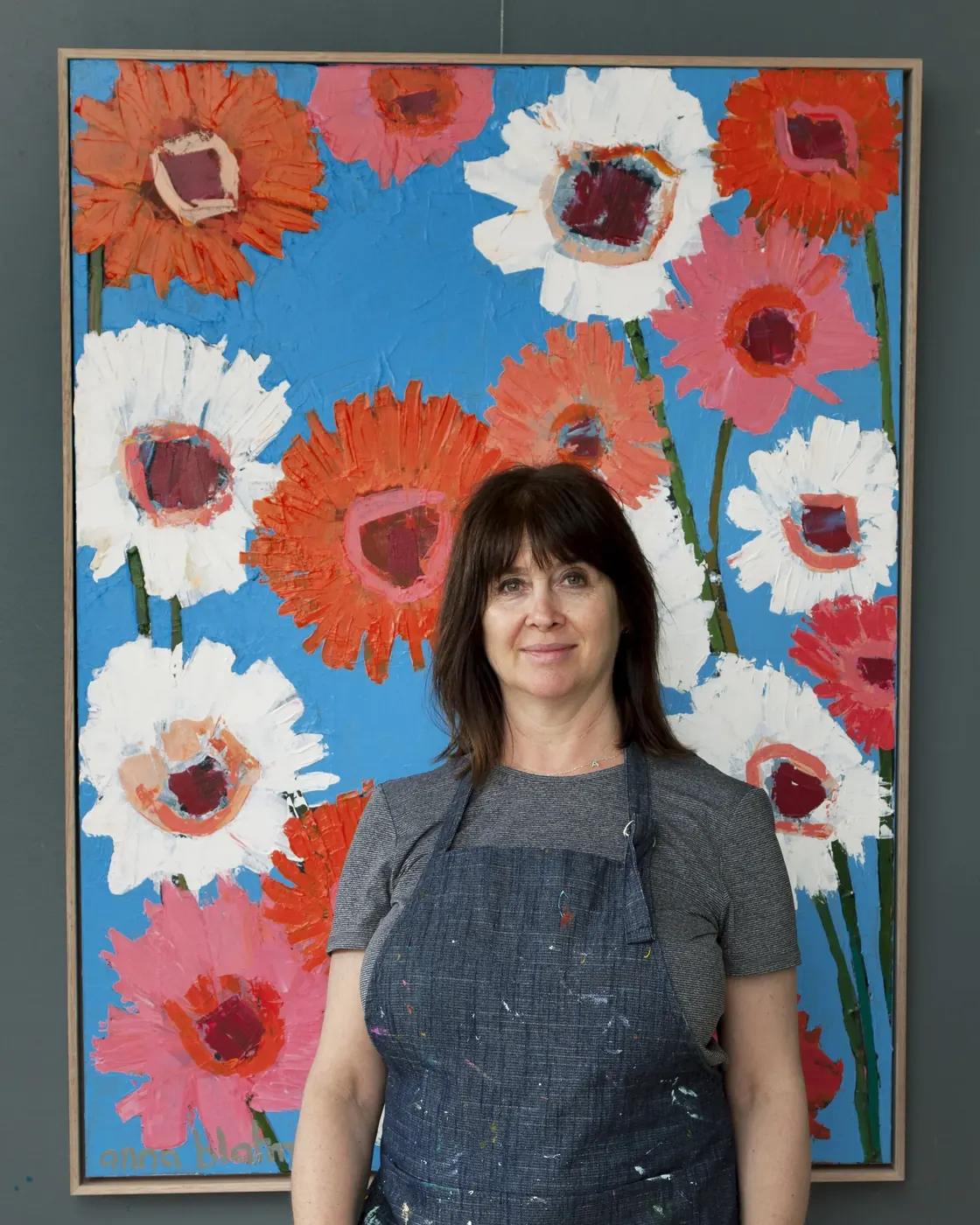 © Anna Blatman. Source: annablatman.com/about
What we see as makers
Thick texture can be the whole point. Blatman piles paint high enough to hold its own ridges and shadows, and wants hands on it: “I like to put a lot of paint on the canvas, and even kids come into my gallery and want to touch the paintings… if they want to touch it, let them touch it.” A tufter deciding pile height can take the same permission: texture is not something to trim away for tidiness.
Dark shapes go down before the light. For a floral piece she starts with the darks and a loose outline of the stems, then builds brighter colour in layers over the top. A tufted panel can follow the same order: a darker base colour tufted first, with brighter accents over sections of it, gives a loop its shadow before the highlight arrives.
A repeated motif needs variety to stay alive. Blatman fills a canvas with a whole bunch of flowers, never identical. “I like flowers that are not all the same in the bunch,” she says. “It’s like family; you’re not all the same.” A tufter repeating one flower shape across a panel can borrow the rule: change the size, colour or angle of each repeat so the field reads as a group, not a stencil.
The drip connection
Blatman’s paint stays where the palette knife puts it, building up into a ridge that holds its shape, which is why her canvases end up thick enough to touch. Jan Fechner’s drip tufting, developed at BUBU Studio, keeps the colour moving instead: wool bleeds from one hue into the next while the gun works the row, so the edge never sets hard. Blatman’s texture grows upward, stroke stacked on stroke. Jan’s grows sideways, one colour spreading into whatever sits next to it.
Want to feel the difference between a fixed edge and a moving one? Book a session in Paphos.
Sources: “Anna Blatman,” Canterbury Art Exhibition artist biography, canterburyart.com/artist/Anna_Blatman. “Lost in colour: The nostalgic artworks of Anna Blatman,” Style Curator, stylecurator.com.au. Artist interview, Anna Blatman UK, annablatman.co.uk/pages/about. Artist website, annablatman.com/about.
Try it with yarn in your hands.
Tufting workshops in Paphos, every week.