
Drip Check · 22 October 2026
Drip Check 12: Emily Powell, a barn turned into the Arctic
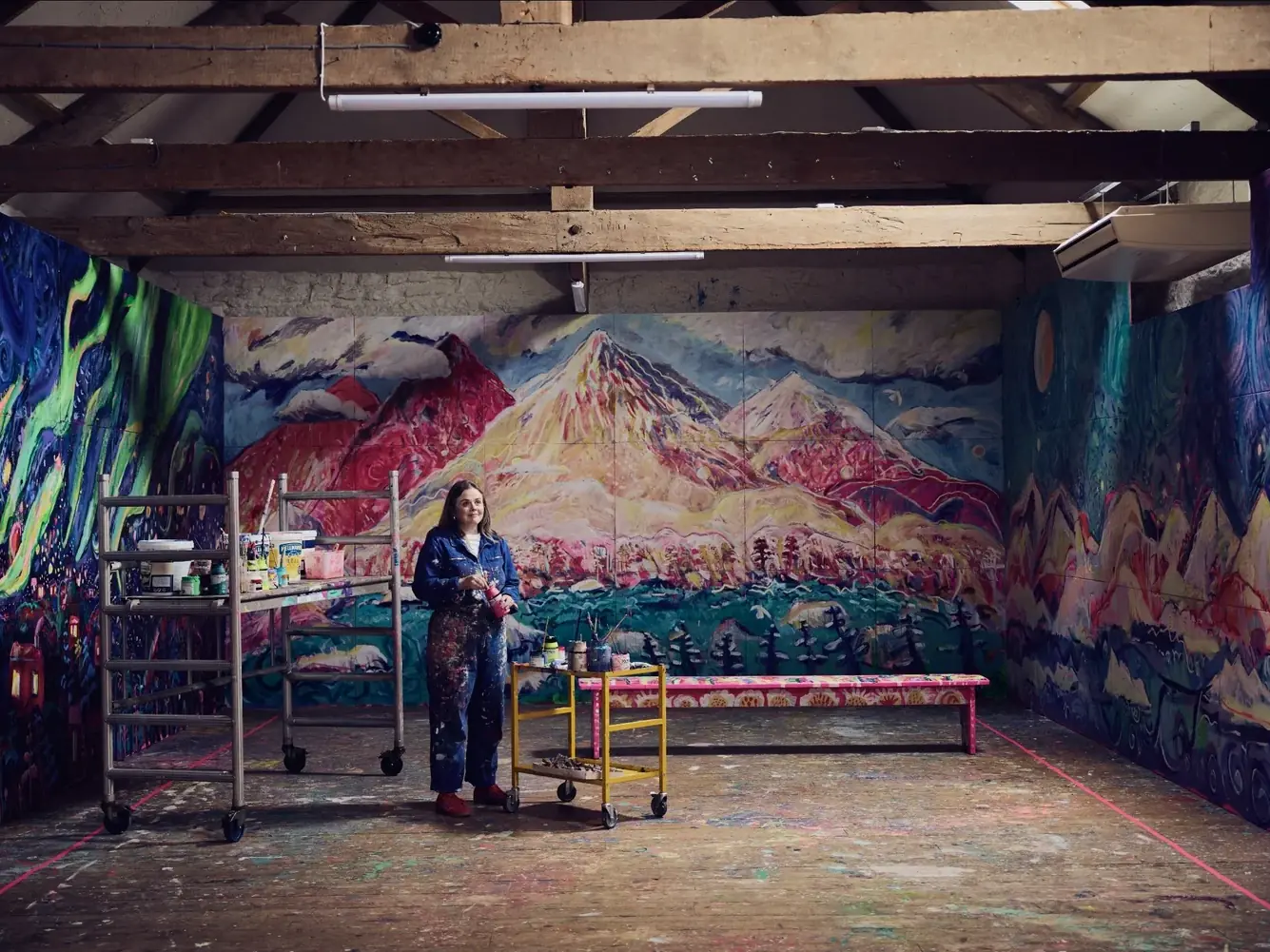
When the winters get hard, Emily Powell does not turn the heating up. She turns a barn into the Arctic.
The work
Powell grew up in Liverpool and trained at Norwich School of Art, with a sabbatical year at the Ecole Régionale des Beaux-Arts de Rouen. She now lives in Devon and paints from a barn studio at Ullacombe Farm, on the edge of Dartmoor, working mostly in acrylic and oil pastel at a scale that often fills a wall rather than a canvas.
In March 2024 she joined a four person expedition to Sommarøy, a fishing island inside the Arctic Circle in Norway, with acrylic paints, hiking gear and only one tube of white, which ran out early and pushed her toward peach, pink and intense blue instead. Over four days she painted 20 works on paper outdoors, working straight from the coral beaches and snow mountains in front of her. Back in Devon, set builders lined her barn studio floor to ceiling with canvas panels, and she spent two months filling it with paint and, for the biggest passages, a kitchen broom, recreating six scenes entirely from memory. “It felt so powerful to paint so big, and wonderful to bring it back to Devon,” she said. “I didn’t use any photographs to paint from, so these are just the memories of it.” The result, Arktisk, opened in her barn studio in November 2024, meant, in her own words, to “flood the body and mind with colour and light.”
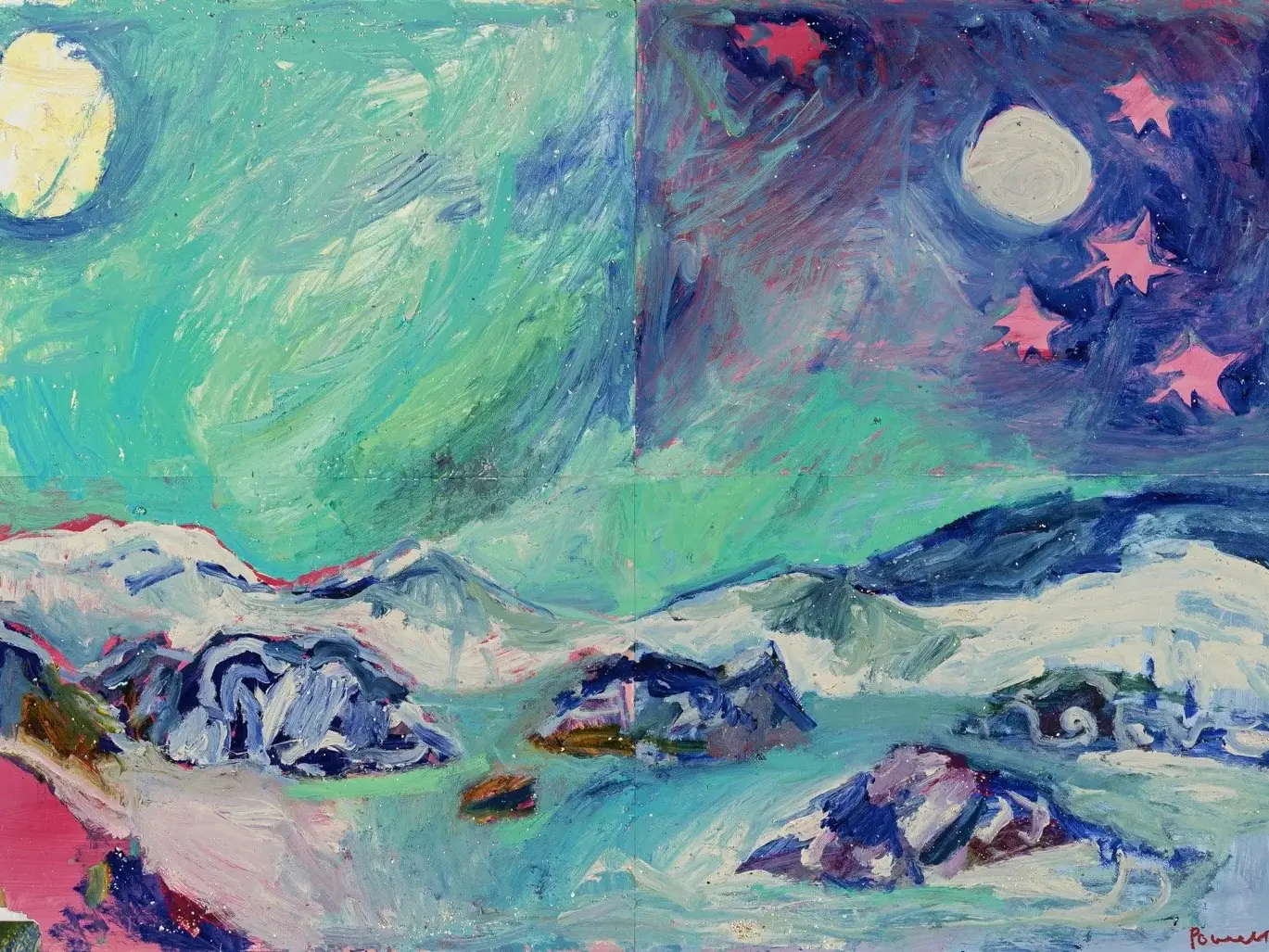 © Emily Powell. Source: emilypowellstudio.com
What we see as makers
Running out of a colour can produce a better palette. Powell lost her only white early into the trip and reached for peach, pink and intense blue rather than stopping to source more. A tufter low on one yarn can treat the gap the same way, reaching for a nearby colour in the stash instead of pausing a piece to chase an exact match.
Painting from memory keeps a scene from turning into a copy. Powell built her giant barn panorama without a single reference photo, working from what she remembered of four days on the island. A tufter can try the same on a smaller scale, sketching the main shapes from memory first and checking a photo only for the detail that matters most.
A room can be the canvas, not just hold one. Powell had her whole barn wrapped in canvas before she started, so the piece reads as one continuous scene wrapping a corner rather than separate panels on separate walls. A tufter scaling past a single panel can plan the seams as part of the composition from the start, instead of matching edges after the fact.
The drip connection
Powell’s colour sits inside a brush stroke or a broom sweep, wide and loose but controlled, laid down and left to dry. Jan Fechner’s drip tufting, developed at BUBU Studio, hands that decision to the wool itself, letting one colour bleed into the next as the gun keeps moving. Powell reached for peach because the white ran out. Jan lets a colour run into whatever sits beside it, with nothing running short at all.
Want to see a wall sized scene decided by the wool instead of the brush. Book a session in Paphos.
Sources: Claire Hayhurst, “Artist recreates scenes of Norwegian Arctic in Dartmoor barn”, PA Media, 16 November 2024, published at itv.com. Arktisk, artist’s own project page, emilypowellstudio.com. Artist profile, Morningside Gallery, morningsidegallery.co.uk.
Try it with yarn in your hands.
Tufting workshops in Paphos, every week.