
Drip Check · 23 October 2026
Drip Check 13: Becky Blair, colour built in layers
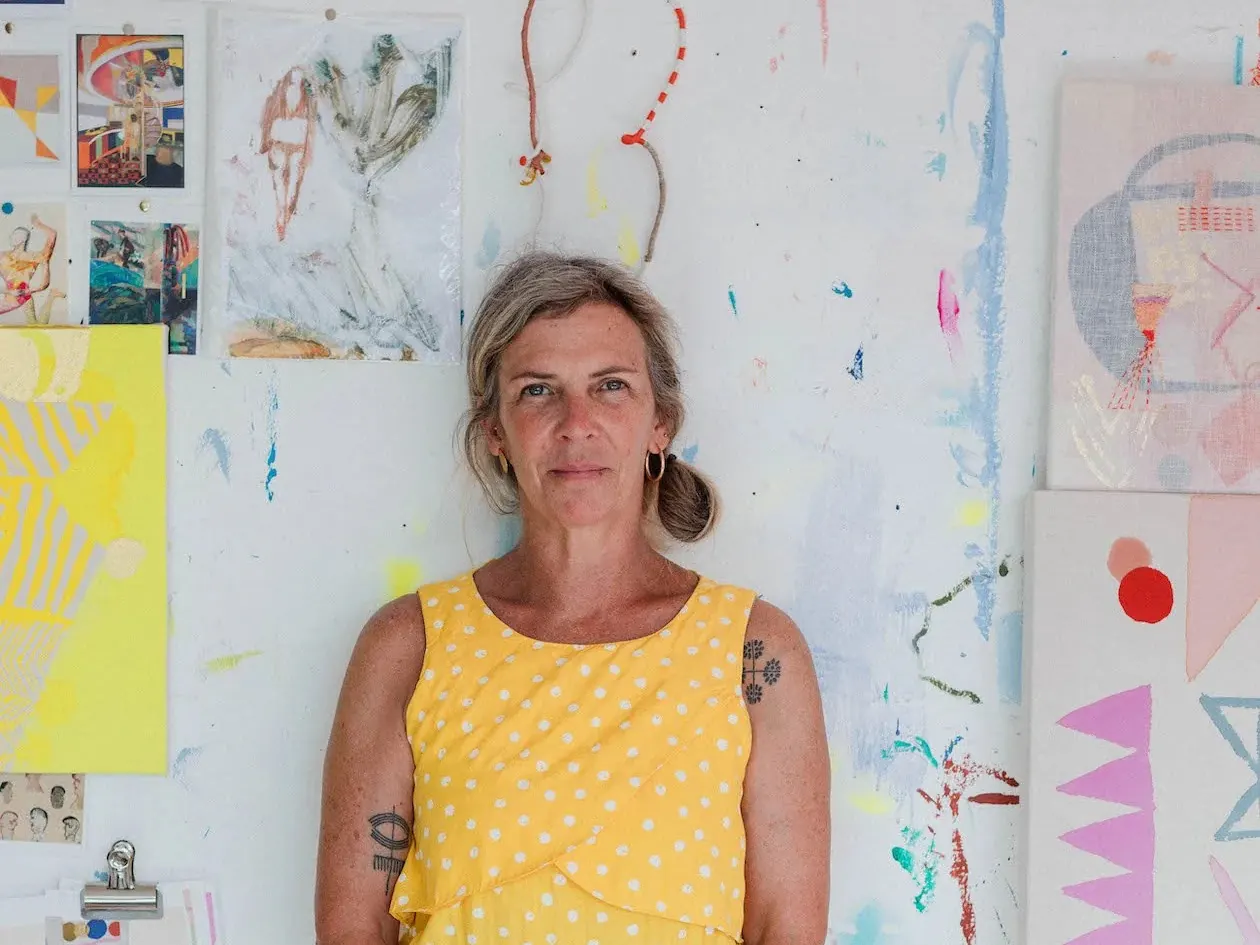
On the fourth floor of a 1950s Brutalist block on Brighton seafront, Becky Blair paints in a studio where the colour has crept off the canvases and onto the walls and floor around them.
The work
Blair grew up in the Midlands and trained in Fine Art at Cheltenham and Gloucester College, graduating in 1994. She has painted from Brighton since the late 1990s, working today from a south east facing studio at the Phoenix, a converted Brutalist building she shares with other artists. Her twenties were split between travel through India, Nepal, South East Asia and Australia, and commissioned work for Pizza Express restaurants between 1995 and 2005. A long relationship with Western Australia followed, starting with her first Perth show at Gadfly Gallery and continuing through solo exhibitions including Standing On Tiptoe in 2011 and Bound To The Rush in 2013.
She works mainly in acrylic, a material she has used since college, moving to oils or soft pastels depending on the piece. Her compositions build through repeated layers of glaze, drawing and printing, forming what she describes as pools of overlapping colour, with negative space added and removed as the painting develops rather than planned from the start. “The process of each painting is patient and meditative, I can’t rush them,” she has said of the work. In recent years she has carried that same slow layering into fibre, working free warp tapestry, knotted netting, looping, split ply weaving and embroidery straight onto canvas alongside paint.
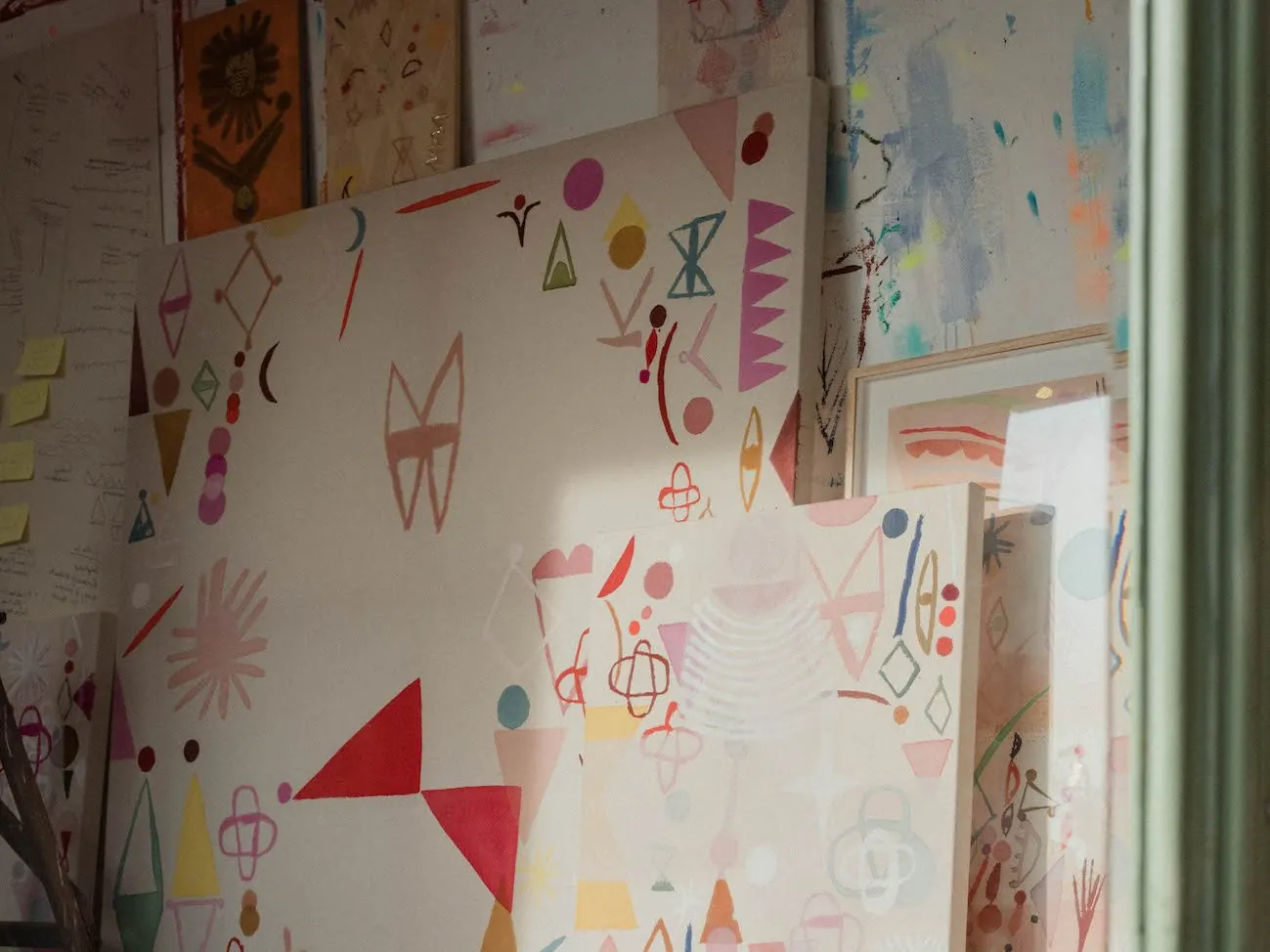 © Becky Blair. Source: beckyblairartist.co.uk/about
What we see as makers
A colour field can be built, not placed. Blair gets her pools of colour by brushing one glaze over another and letting both stay visible, rather than mixing a single flat shade. A tufter chasing the same depth can tuft a base colour first, then run a second, thinner colour of loops over parts of it, so the first colour still shows at the edges.
Negative space is a tool you add during the work, not before it. Blair edits her canvases as she goes, taking shapes out and putting others in rather than fixing the composition up front. A tufter can leave a panel unresolved past the first pass, cutting back or adding colour once the overall shape is visible instead of locking the design before the gun starts.
A new material does not have to replace the old one. Blair added weaving, looping and embroidery to her practice without giving up painting, and now moves between them on the same canvas. A tufter stuck on one technique can borrow a single move from a different fibre craft, a looped edge or a knotted fringe worked into an otherwise flat panel.
The drip connection
Blair’s pools of colour take shape slowly, one glaze brushed over the last and left to dry before the next goes on. Jan Fechner’s drip tufting, developed at BUBU Studio, compresses that same layering into a single pass: the gun keeps moving while wool bleeds from one colour into the next, so the blend happens live instead of over several sittings. Blair can always go back and add one more glaze. Jan gets one chance at the blend, right there in the wool.
Want to see colour decided in one pass instead of several? Book a session in Paphos.
Sources: “Becky Blair,” artist biography, Shortst Gallery, shortstgallery.com.au/artists/777. “Becky Blair: Artist Up Close and Personal,” Jahroc, jahroc.com.au. Artist website, beckyblairartist.co.uk/about.
Try it with yarn in your hands.
Tufting workshops in Paphos, every week.