
Drip Check · 27 October 2026
Drip Check 17: Anna Pascher, a fashion label traded for a painted table
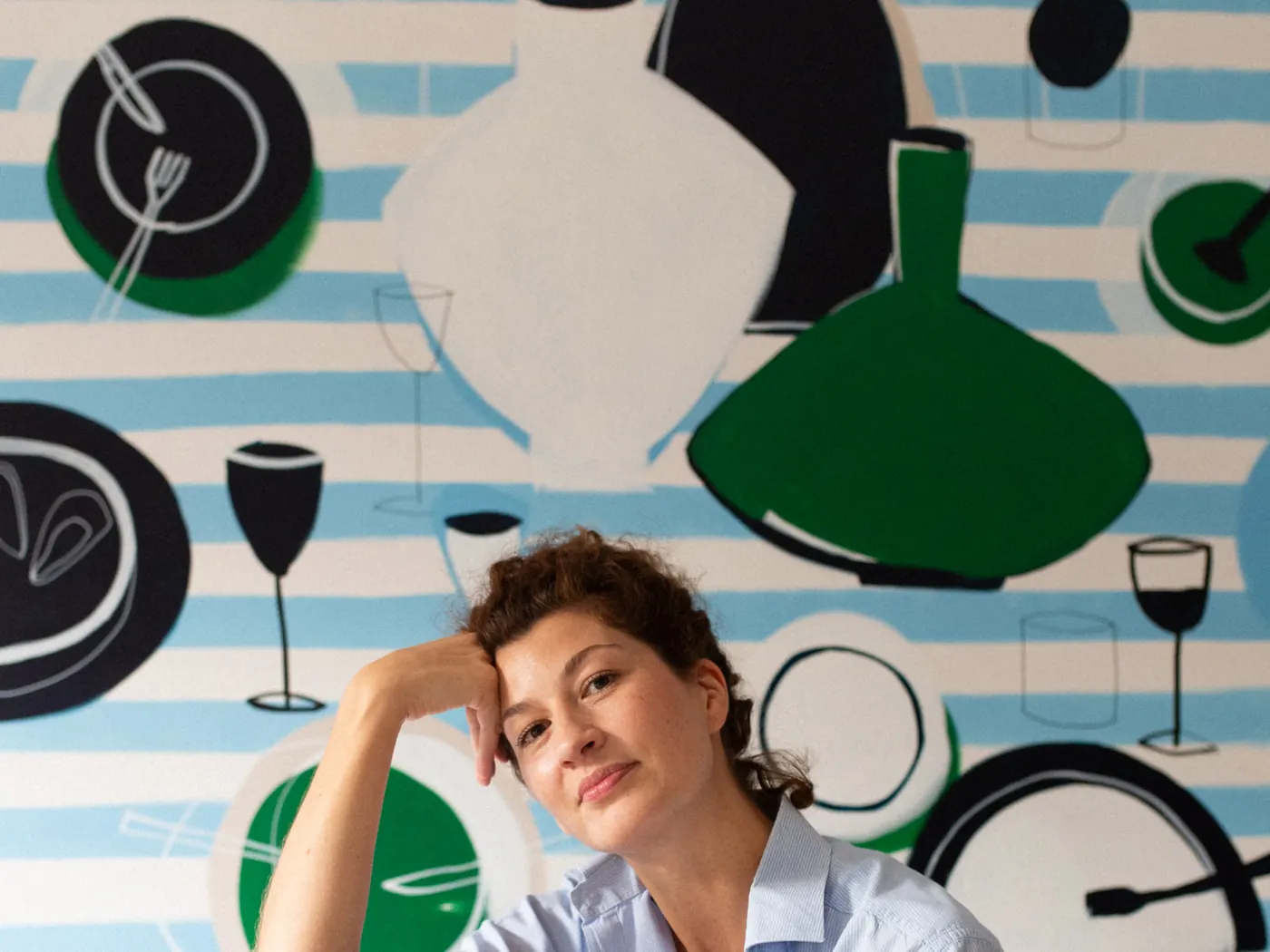
Anna Pascher ran a fashion company in Berlin for over a decade before she put that away and started painting tables instead.
The work
Pascher is a Düsseldorf-based painter who studied fashion design at the AMD in Düsseldorf, then spent more than ten years running a corporate fashion label with her husband in Berlin. In 2021 the couple moved back to the Rhine region with their two children, and she finally acted on a pull toward art she had carried for years. She has described the decision in four words: “Jetzt oder nie!”, now or never.
Since then she has painted everyday objects, mostly table scenes, as colourful, increasingly surrealist still lifes: plates, wine glasses, vases and fruit built from flat shapes and overlapping outlines, often inspired by specific meals and moments with friends and family. She works in acrylic, oil and graffiti paint on paper and canvas, and describes her process as intuitive rather than planned. “My intuition is my inspiration and at the same time my intention,” she has said. “Without overthinking, I translate these sensations into visual art.” Her first solo show, La Fête, opened at Nails Projectroom in Düsseldorf in 2023, followed by Between Bites and Blurs in Berlin in 2024. She has also designed a tableware collection for the porcelain brand Dibbern, drawing on a grandmother who once painted porcelain herself, and released limited prints such as Vase IV through the platform Expanded.art.
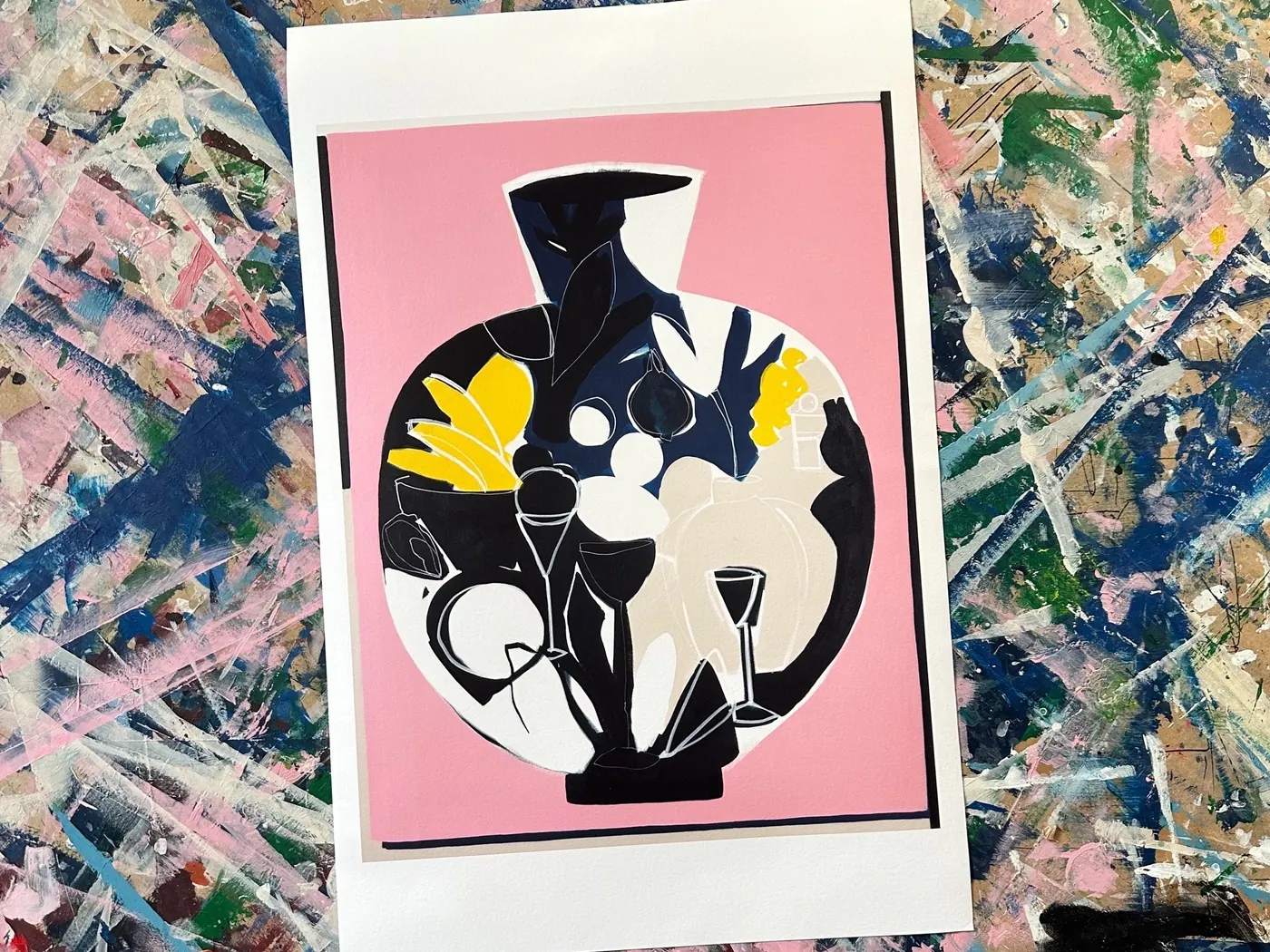 © Anna Pascher. Source: annapascher.com
What we see as makers
A table is a composition waiting to happen. Pascher paints the same plates, glasses and bottles that sit on a table after a long dinner, arranged into shapes that still read as a table even once they are flattened and overlapped. A tufter staring at a blank panel can borrow the habit: start from objects already grouped in real life, a windowsill, a shelf, rather than inventing a layout from nothing.
One wide silhouette can hold a dozen small ones inside it. Several of her still lifes pack glasses, fruit and plates entirely inside the outline of one large vase, so the big shape reads first and the detail rewards a second look. A tufter can use the same structure on a panel: cut one bold outline first, then fill it with smaller tufted motifs instead of scattering them across the whole field.
Working fast protects the feeling of a piece. Pascher paints without detailed planning, trying to keep the atmosphere of a memory intact before she overthinks it. A tufter can do a version of this with a quick practice piece: block in the main shapes first, at speed, and only slow down for the small decisions once the composition already feels right.
The drip connection
Pascher keeps her shapes hard-edged, every plate and glass sealed behind its own outline even as they overlap and tangle. Jan Fechner’s drip tufting, developed at BUBU Studio, removes that sealed edge on purpose, letting one colour of wool run into the next as the gun keeps moving. Her still lifes stay still because every object holds its line. A drip piece moves because the gun is allowed to let a line go. Both start from the same question: where exactly does one object end and the next begin.
Want to find out where your own lines want to blur? Book a session in Paphos.
Sources: “Die Weitläufigkeit inmitten der Stadt ist toll”, Visit Düsseldorf, 24 November 2023, visitduesseldorf.de. Artist website, about and projects pages, annapascher.com.
Try it with yarn in your hands.
Tufting workshops in Paphos, every week.