
Drip Check · 28 October 2026
Drip Check 18: Charlotte Culot, from mud walls to layered colour
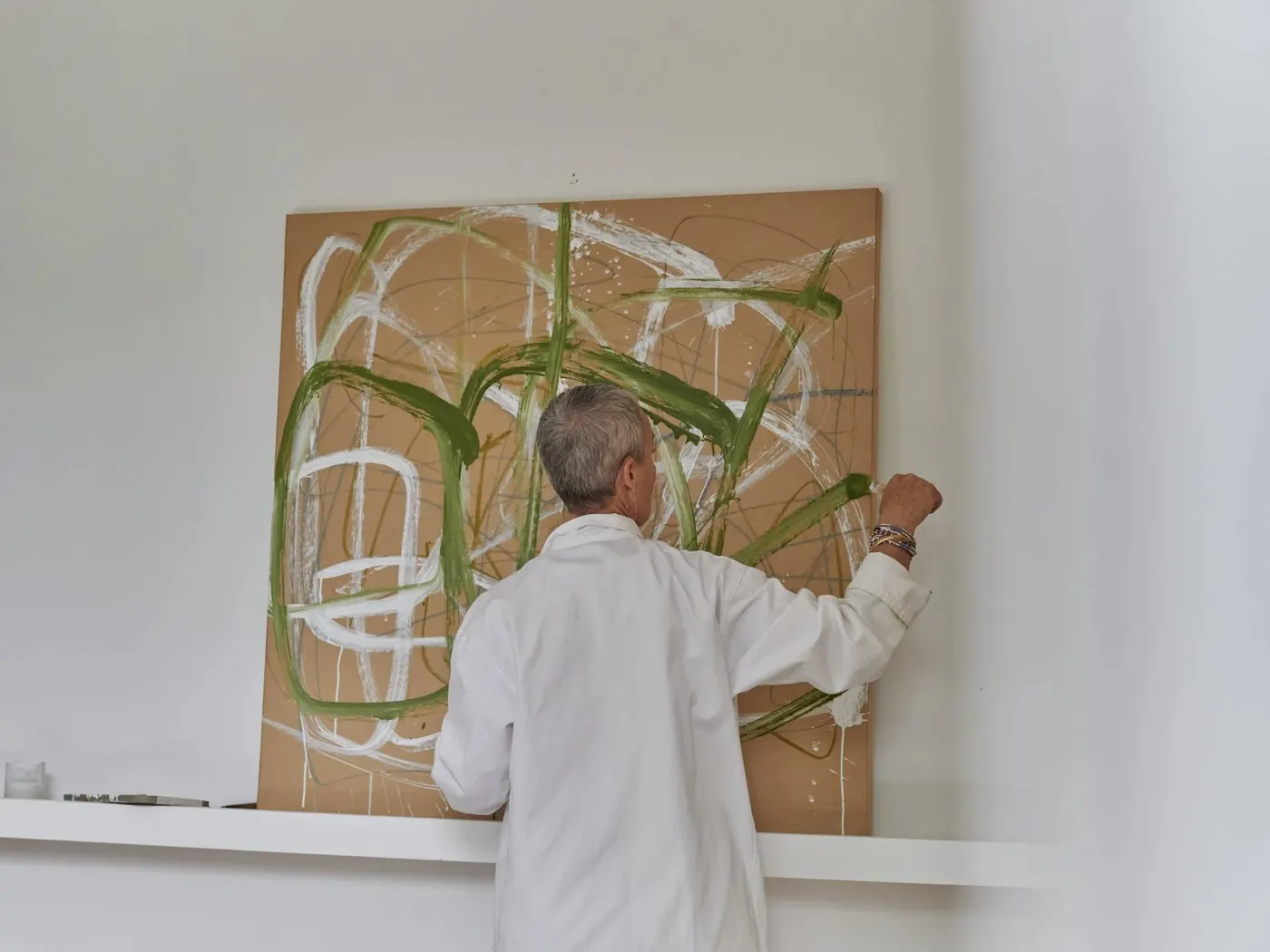
Before Charlotte Culot ever mixed a pot of gouache, she wrote a university thesis on how mud walls are built across West Africa, and that eye for how a structure holds itself together never really left her work.
The work
Culot was born in Belgium in 1964 into a family of artists. Her father, Pierre Culot, was a potter and sculptor, and her mother illustrated children’s books. She had no formal art training, studying archaeology and art history instead, with a 1988 thesis on traditional earth architecture in West Africa. She began painting in 1990, returning to the gouaches, pigments and pastels of her childhood on sheets of brown kraft paper. Her early work was still life, flat and vividly coloured, built with the strong framing of Matisse and the Nabis. Over roughly fifteen years that work moved into full abstraction. “It took me about 15 years to evolve from the semiabstraction of the still lifes to the real abstraction I practice today,” she has said. She still mixes her own gouache for its matte finish and saturated pigment, and builds her paintings by tearing coloured paper and pasting it onto kraft-primed canvas in layers, which gives the finished pieces a built, architectural quality rather than a painted one. She has exhibited across Europe since 1990 and in the United States since 1994. In 2022 she co-founded Maison Rhizomes with Hannah Vagedes, an atelier making hand-knotted rugs in the same bright, graphic colour she paints with, shown together in the exhibition “Weaving Colors.”
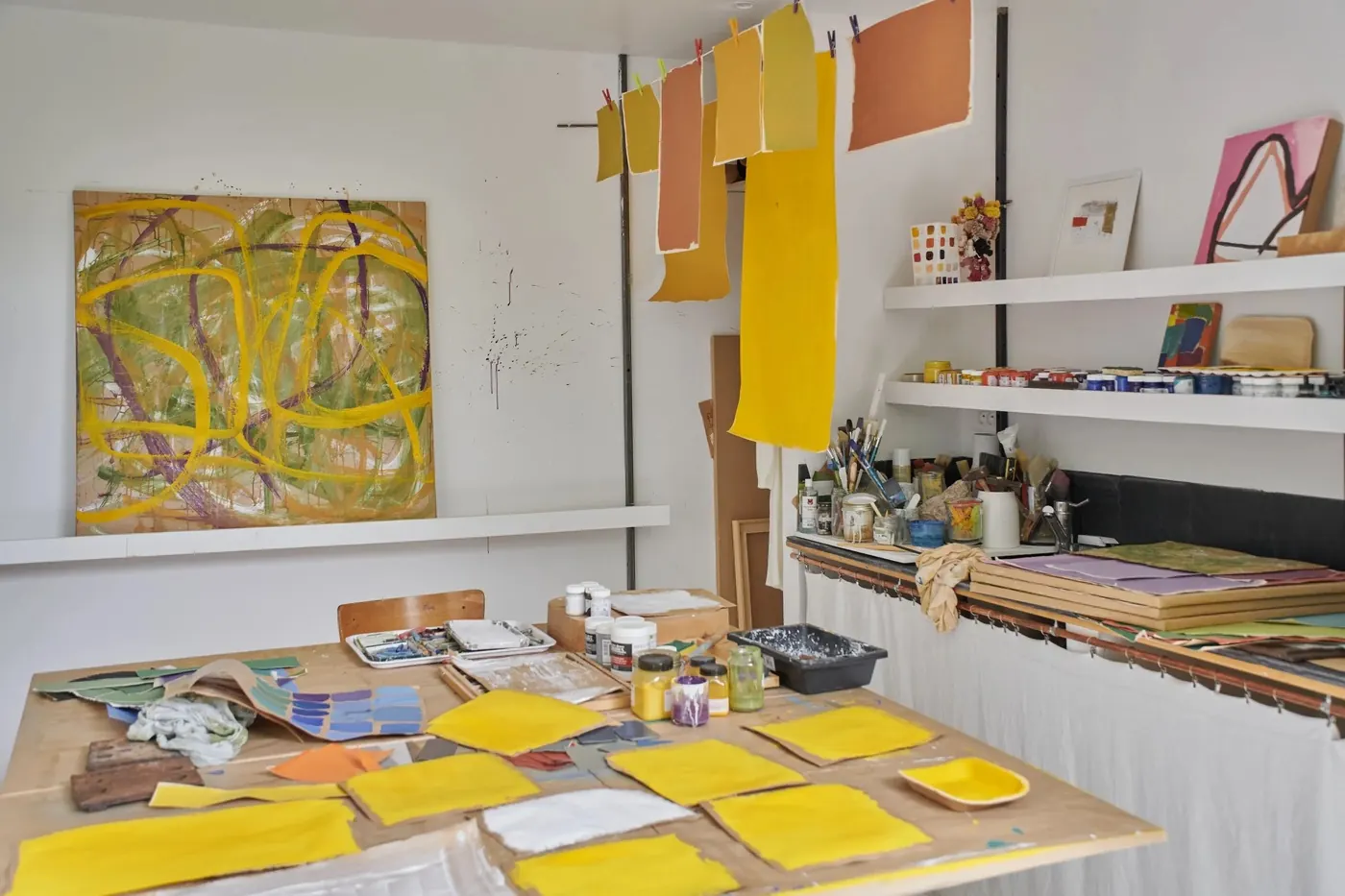 © Charlotte Culot. Source: charlotteculot.com
What we see as makers
A layer can be glued down before you know if it is finished. Culot tears and pastes shapes onto her canvas in stages, so each layer is a separate decision she can build on rather than a single continuous brushstroke. A tufter can treat a panel the same way, tufting one colour block as a complete layer, stepping back, and only then deciding what goes over it, instead of planning every colour before the gun starts.
Training outside the craft still shapes the work. Culot never studied painting. Her eye came from years of looking at how walls are built, and that study of structure fed directly into how she now composes colour. A tufter who arrives from another trade is not starting from nothing: whatever taught them to read structure already applies to a panel.
A colour system can move to a second material without starting over. Culot carries the same bright, graphic palette from her paintings straight into the rugs she designs for Maison Rhizomes, so both bodies of work read as one practice. A tufter who develops a palette for panels can reuse it for cushions or rugs rather than inventing a new one for every object.
The drip connection
Culot’s layers go on in stages, one torn and pasted shape added to the last, each one a decision she can still see and adjust before the glue sets. Jan Fechner’s drip tufting, developed at BUBU Studio, compresses that same instinct for layered colour into a single uninterrupted pass: the gun keeps moving and the wool blends live, with nothing to repaste once it is down. Culot can walk away from a canvas and come back to it. Jan has to commit while the gun is still in his hand.
Want to see what a colour commitment looks like in wool? Book a session in Paphos.
Sources: “1506 Interior Design” (on Charlotte Culot and Maison Rhizomes), Amélie Du Chalard press page, amelieduchalard.com. Artist biography, charlotteculot.com/about-1. Artist website, charlotteculot.com.
Try it with yarn in your hands.
Tufting workshops in Paphos, every week.