
Drip Check · 29 October 2026
Drip Check 19: Matías Larraín, a figure cut from one sheet of black paper
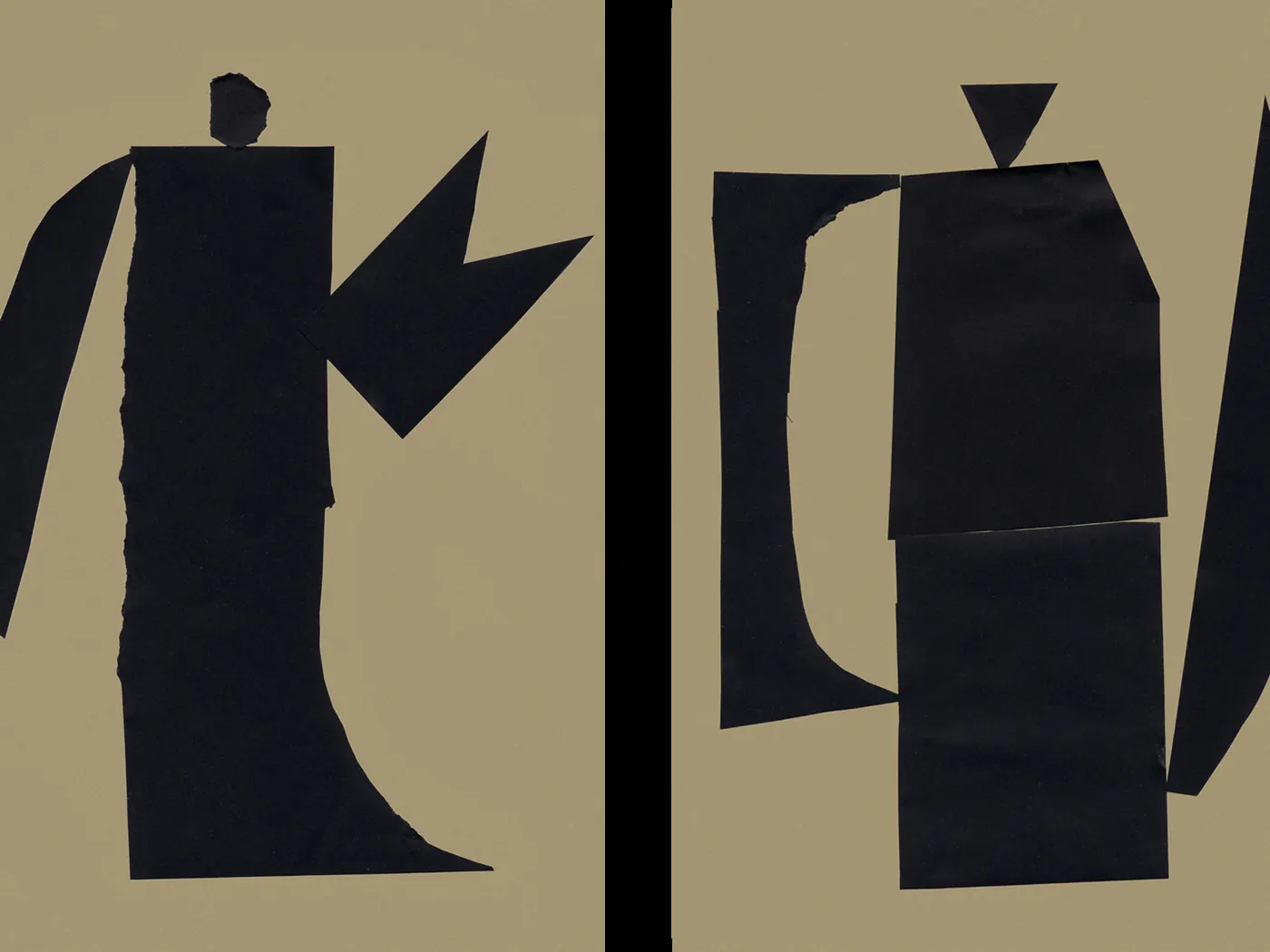
Matías Larraín builds a figure out of torn black paper and never once draws a face on it, and the shape still reads as someone standing there.
The work
Larraín is an Argentinian illustrator and artist. “I was born in Mendoza, Argentina, where I studied Advertising and Visual Communication Design,” he writes on his studio site. In 2018 he moved to France and began developing his practice as a visual artist, working across paper, scissors, coloured pencils, paint and digital software. The Poster Club, which sells his prints, credits the move to meeting Marie, who he later married; the couple spent a year cycling across Europe together in 2023, a trip he has said still shapes how he looks at colour and landscape.
His Cafetières Series, named after the French word for coffee pots, is built from flat black paper shapes, some torn by hand and some cut clean with scissors, stacked into tall robed figures with a small round head and no features at all. The same practice supplies different commercial work: a pattern collection for the fashion label Mile, a woven blanket for Slowdown Studio photographed in a lavender field, a cover for Bon Appétit’s “Art & Design” issue, and Wordle illustrations for The New York Times. He is represented in South Korea by Pinzle. “Colours are the protagonists in many of my works,” he has said of his wider practice, “I can spend hours studying how they behave with each other and the emotions that certain combinations arouse.”
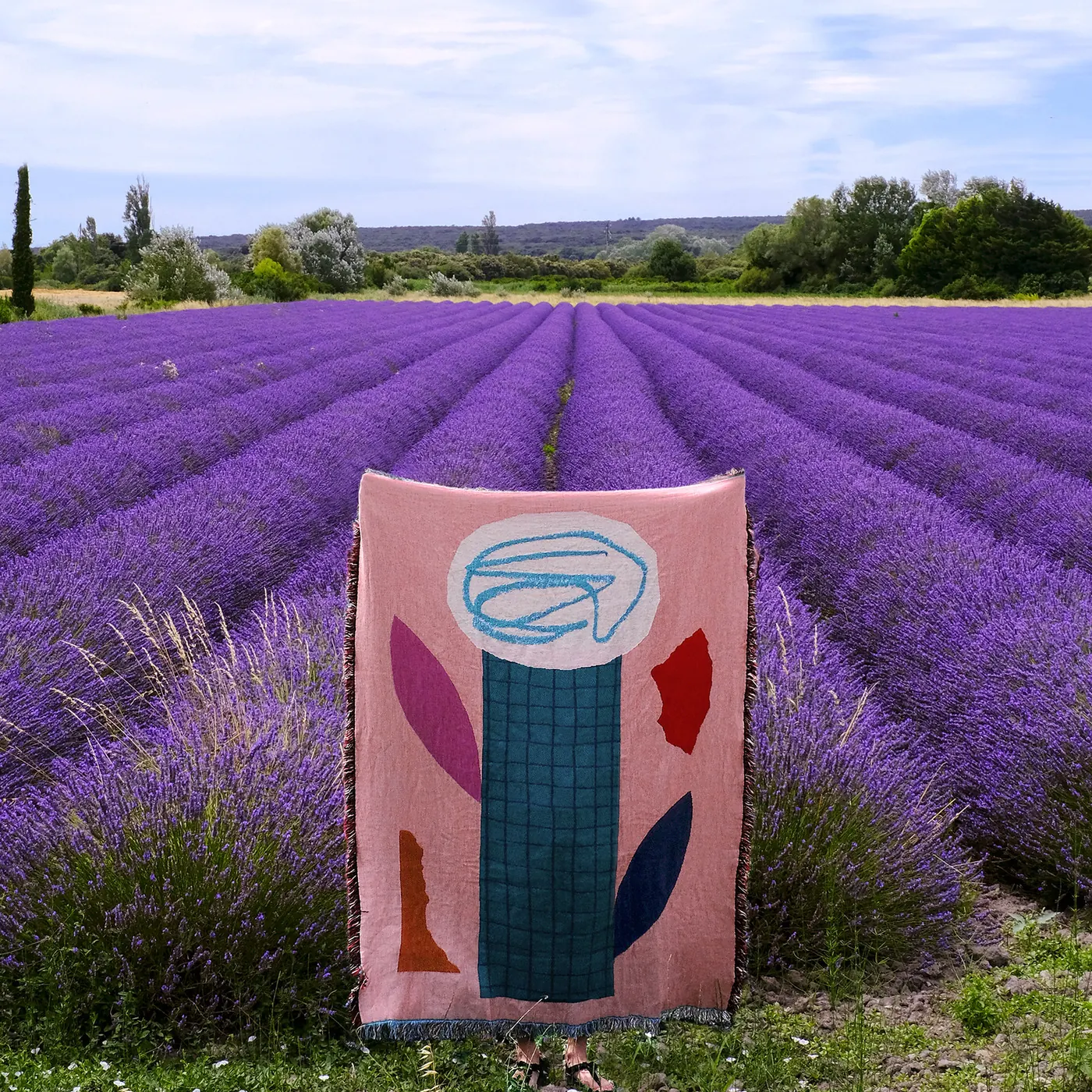 © Matías Larraín, for Slowdown Studio. Source: matiaslarrain.fr
What we see as makers
A head needs almost nothing to read as a head. The Cafetières figures get a collar, a round shape where a head belongs, sometimes an angular wing-like piece for an arm, and stop there. A tufter building a character panel can trust the same economy: a rounded patch of pile in the right place often does more work than a tufted face ever would.
A rough edge next to a clean one tells its own story. Several of his cut shapes keep one hand-torn edge beside a scissor-straight one in the same figure, so a viewer can feel which decision was fast and which was deliberate. A tufter can leave one edge of a shape slightly uneven on purpose instead of trimming every border to the same crisp finish.
One motif can move to a different object. The same coffee pot shape behind Cafetières turns up again, reworked, as a blanket design and a magazine cover element. A tufter who likes a motif from a small test swatch can carry it forward to a cushion or rug instead of starting fresh each time.
The drip connection
Larraín works in two materials with very different rules. Digital software lets him undo a line with one keystroke. Paper does not forgive a bad cut; a mistake can only be patched with a new piece glued on top. Jan Fechner’s drip tufting, developed at BUBU Studio, lives on the paper side of that line. Once the gun lays wool down and keeps moving, that blend is sealed into the pile, with no undo available. Larraín can choose which risk he wants. Jan commits to it the moment the trigger is pulled.
Curious what a decision with no undo feels like in wool? Book a session in Paphos.
Sources: Artist profile, The Poster Club, theposterclub.com/pages/artists/matias-larrain. Artist website and about page, matiaslarrain.fr and matiaslarrain.fr/about.
Try it with yarn in your hands.
Tufting workshops in Paphos, every week.