
Drip Check · 12 November 2026
Drip Check 33: Mestiz, craft with its hands still dirty
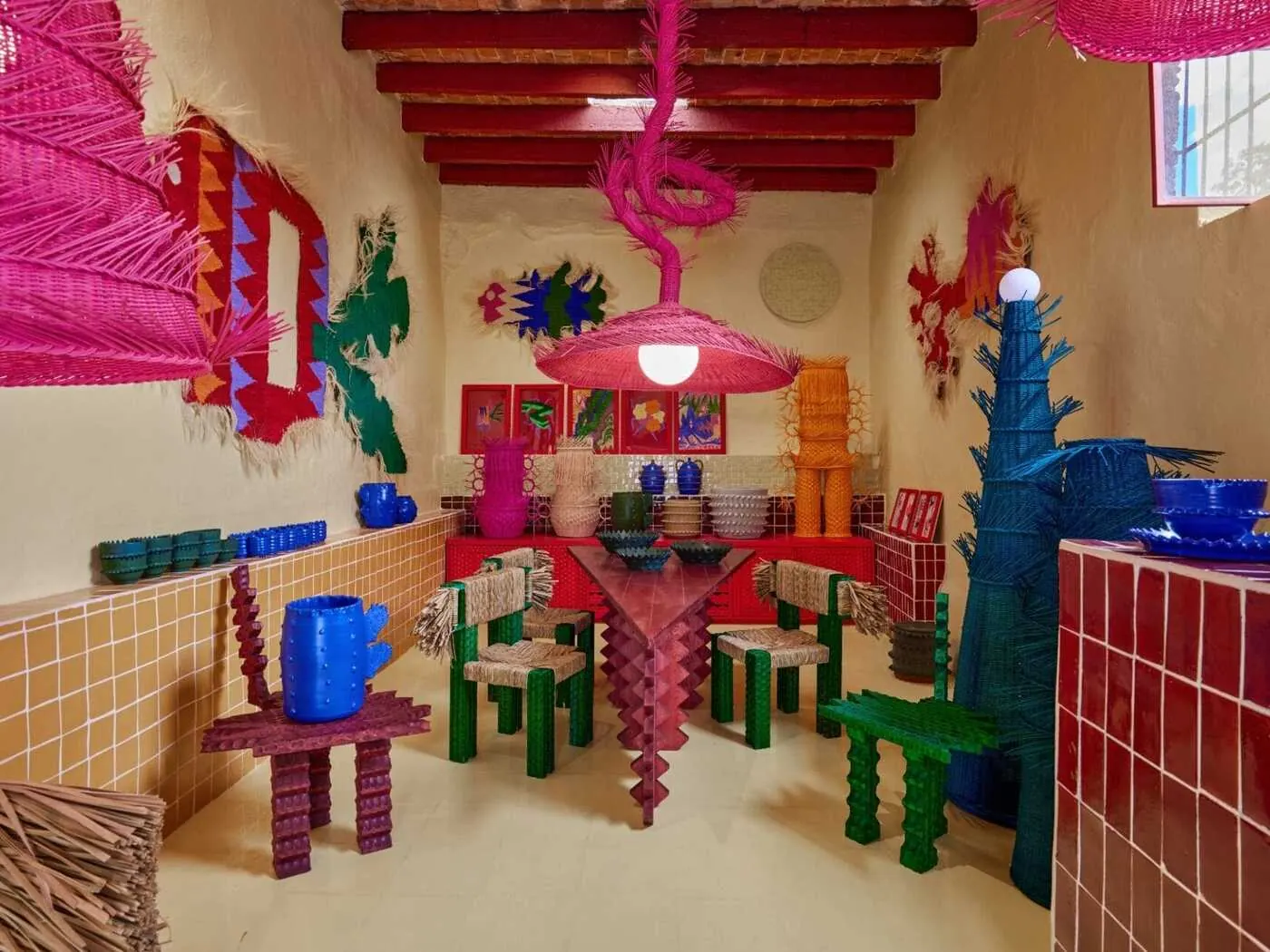
Daniel Valero finished an architecture degree and decided it had left his hands too clean.
The work
Valero was born in Saltillo, in northern Mexico, and his real education started away from any studio: weaving sarapes with brothers Héctor and Rubén Tamayo, who taught him that a craft carries its place and history inside it, down to how local water changes a dye. He later studied textile design in Paris on a joint scholarship from the Mexican and French governments, then came back and founded Mestiz in San Miguel de Allende in 2015, built as a platform for Mexican craftspeople to push their own techniques somewhere new.
The studio does not run a workshop of its own. Valero drives through the hills around San Miguel to visit the people who make the work: basket weavers in Tequisquiapan, potters in Dolores Hidalgo, woodworkers closer to home. He designs the pieces, then hands them to makers who have worked in wicker, clay or wood for years and lets their technique shape the result as much as his sketch does. The output reads as one wild family: tall woven lamps that end in a burst of loose fibre like a firework frozen mid-explosion, carved wooden tables with gouged, spiky feet, rugs with cactus and animal silhouettes, ceramics painted in saturated blue, pink and orange. Clients have included Hermès, which hired the studio for its Mexico store windows, and Casa Dragones, for an installation at Rockefeller Center.
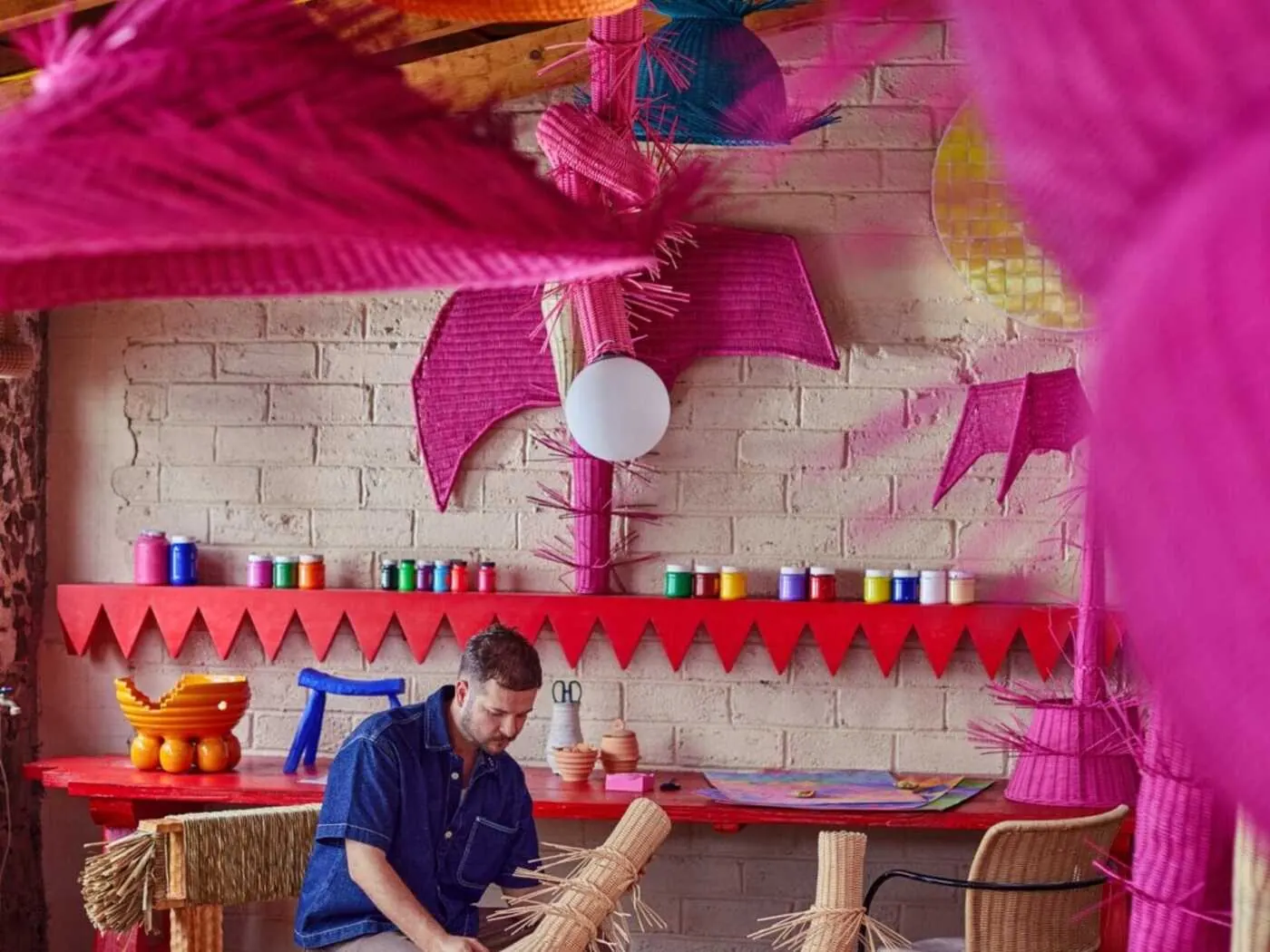 © Mestiz, photo: Pepe Molina. Source: thisiscolossal.com
“I began to understand crafts as site-specific to a certain point in history,” Valero has said of what the weaving apprenticeship taught him.
What we see as makers
Visiting the maker changes the design, not just the delivery. Valero drives to the workshops himself instead of mailing a spec sheet, so the artisan’s habits enter the piece before it is finished. A tufter working with a second pair of hands, a photographer, a framer, a shop owner, can get more from a short visit than a long email.
One family of objects reads stronger than one hero piece. Mestiz rarely shows a single lamp or table alone; it is always lamp, chair, rug and bowl together, sharing a palette and a logic. A tufter preparing a show or a shop wall can hang three or four pieces that clearly belong to the same idea rather than one strong standalone hoop.
A material’s own limits are part of the design, not an obstacle to erase. Wicker fringes, frays and holds its own stiffness; Valero’s lamps let that fringe explode outward instead of hiding it under a clean edge. A tufter can let a yarn’s natural behaviour, a loop that won’t sit flat, a colour that bleeds slightly, stay visible in the finished piece instead of correcting it away.
The drip connection
Mestiz keeps the artisan’s hand fully visible: a woven edge stays frayed, a carved foot stays rough where the tool bit in. Jan Fechner’s drip tufting, developed at BUBU Studio, works from the same instinct but trusts machine and gesture instead of an artisan’s years of practice. There is no sketch to correct against, just the gun held steady while wool meets wool and one colour runs into the next of its own accord. Valero channels craft traditions that already exist elsewhere into a new object. Jan starts from nothing and lets the material decide as he goes.
Curious what a frayed edge or a bleeding colour looks like once it is tufted rather than woven? Book a session in Paphos.
Sources: Grace Ebert, “Daniel Valero’s Wild Objects Combine Rich History With Modern Design”, Colossal, 12 September 2023, thisiscolossal.com. “Mestiz Celebrates Artisan Collaborations at Colourful Mexico Studio”, Dezeen, 16 September 2023, dezeen.com. “In Vivid Color”, Auberge Resorts Collection, auberge.com. Studio website, mestiz.mx.
Try it with yarn in your hands.
Tufting workshops in Paphos, every week.