
Drip Check · 13 November 2026
Drip Check 34: Tiff Manuell, one painted clutch for a friend
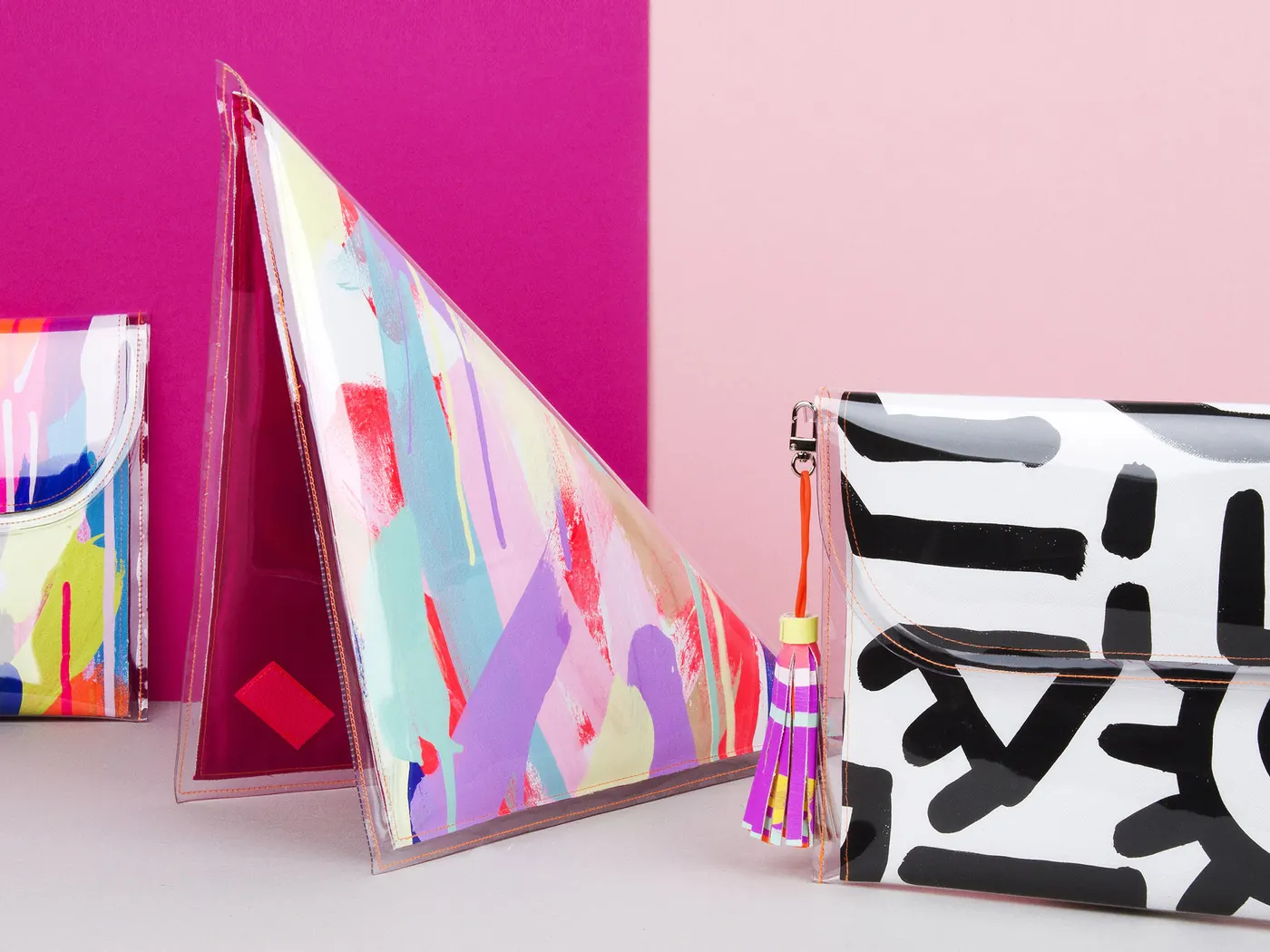
A friend asked Tiff Manuell for a clutch, and that one request turned into a label built entirely around a paintbrush.
The work
Manuell is a multidisciplinary artist and designer working from Adelaide, Australia, trained in fashion design at Melbourne’s RMIT. After graduating she skipped the conventional industry route and at 26 started her first business, Happy House, a product label that still runs today, mostly licensing her patterns internationally. Her eponymous accessories line grew out of a simpler wish: to paint every day instead of illustrating on a screen. It began with that single clutch, then widened into hand-painted, hand-stitched purses, totes, laptop cases, glasses cases, card holders, keyrings and silk twillies, alongside tablecloths and limited pillowcases.
Every piece starts the same way: an abstract painting in acrylic on canvas, worked without a fixed plan. Once the paint is dry, Manuell cuts the canvas into the shape of the product and seals it inside a clear PVC sleeve, so the brushwork survives daily handling instead of fraying or fading. Colour comes first. She picks a combination before she knows what the finished piece will look like, then lets the painting lead. The accessories sell in small, seasonal batches, totes in November and December among them, each one described on her site as hand painted, Australian made and one of a kind.
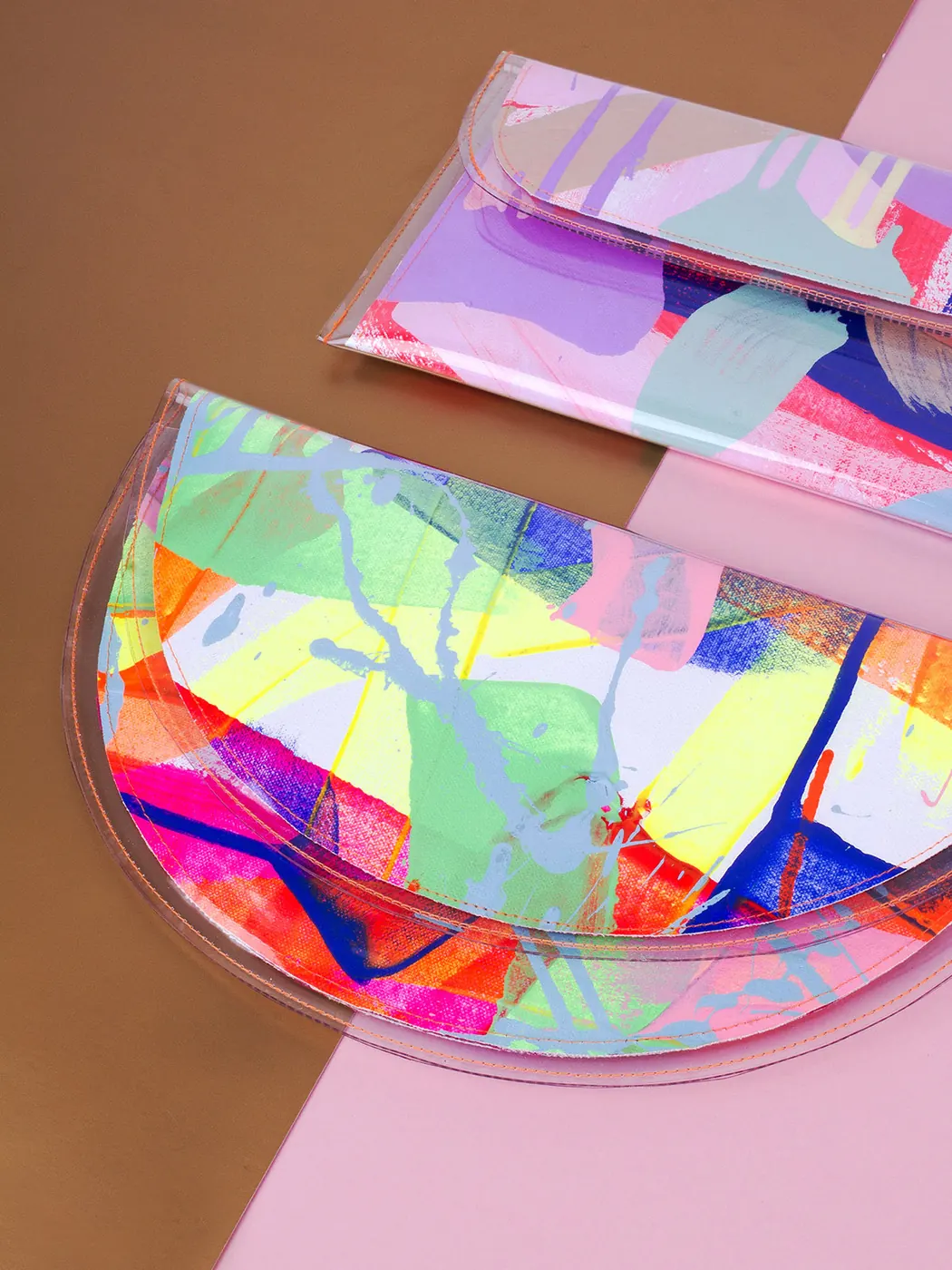 © Tiff Manuell. Source: thedesignfiles.net
“I just absorb everything and then it pours out the brush,” Manuell has said of how a piece comes together. On what keeps her at the easel daily, she has put it plainly: “I am passionate about colour, that is probably what drives my inspiration every day.”
What we see as makers
A single request can become the whole practice. Manuell did not set out to launch a label. She said yes to one friend’s clutch, and the demand that followed did the planning for her. A tufter waiting for a grand idea can start the same way, by saying yes to the next small ask.
Protecting the surface lets the handmade object actually get used. Sealing a painted canvas in PVC means the brushwork can be carried, dropped in a bag and handled daily without wearing away. A tufter making anything meant to leave the wall, a pouch, a coaster, a strap, can think as hard about what guards the pile as about the design on it.
Choosing the colours before the subject keeps the work from going stale. Manuell starts with a palette, not a picture, and paints into it. A tufter who always begins with a sketch could try picking three yarn colours first and letting the motif follow from there instead.
The drip connection
Manuell’s colour runs loose across the canvas in brush marks that pool, overlap and bleed past their own edges, the way paint does when nobody is steering it toward a clean line. Jan Fechner’s drip tufting, the technique he developed at BUBU Studio, pushes that same looseness further: wool meets wool straight from the gun, with no sketch to correct against and no brush to lift away and stop the bleed. Manuell can still choose where a stroke lands on the canvas. Jan hands that choice to the wool once the trigger is down.
Curious what a colour-first design looks like once it is tufted instead of painted? Book a session in Paphos.
Sources: Lucy Feagins, “Tiff Manuell”, The Design Files, June 2015, thedesignfiles.net. Artist website, tiffmanuell.com.
Try it with yarn in your hands.
Tufting workshops in Paphos, every week.