
Drip Check · 14 November 2026
Drip Check 35: Nerea Amondarain, a biscuit tin lit like a shrine
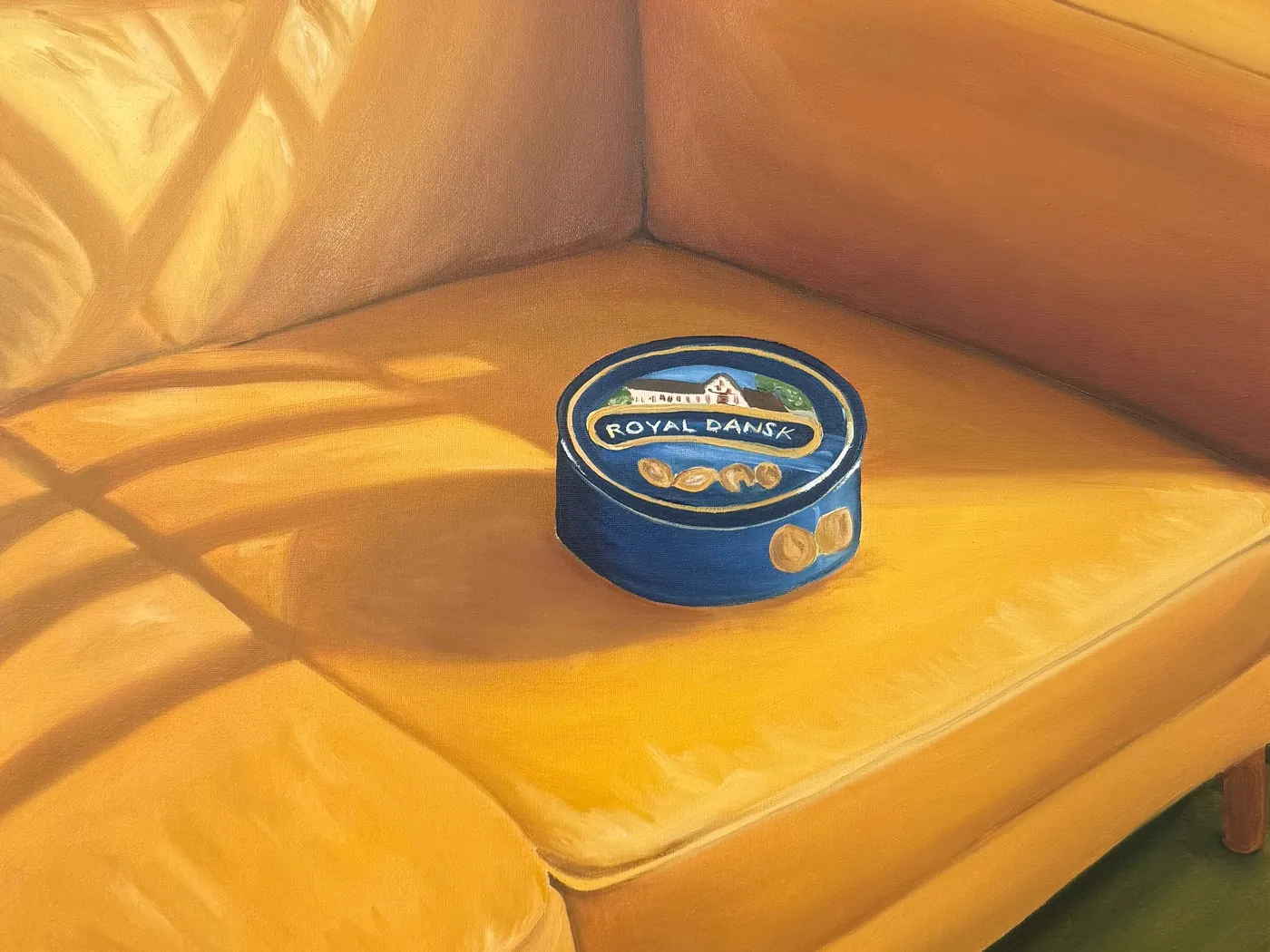
A tin of biscuits sitting on a sofa should not stop anyone mid-scroll, but Nerea Amondarain paints the afternoon light hitting it so precisely that it does.
The work
Amondarain, full name Nerea Amondarain Blázquez, was born in Donostia in the Basque Country in 1997 and now works from Barcelona. She says she has been drawn to art since she was young, but she only started painting in oil in November 2024, which makes her entire body of work barely a year old. She describes her own style as cozy, familiar and modern, built around the beauty she finds in ordinary days, and names fashion and animals among the things she returns to.
Two paintings on her site show where that eye lands. Piscolabis, oil on canvas at 50 by 50 centimetres, sets a hand-labelled tin of Patatas Fritas and a glass bowl of crisps into the corner of a pink-tiled kitchen counter, the tile catching a soft shadow off the can’s rim. Amama, Basque for grandmother, at 60 by 50 centimetres, places a blue Royal Dansk tin on a mustard sofa, sliced by the striped shadow of window blinds. Neither painting needs a figure in it. The light falling across vinyl and tile does the work a face usually would.
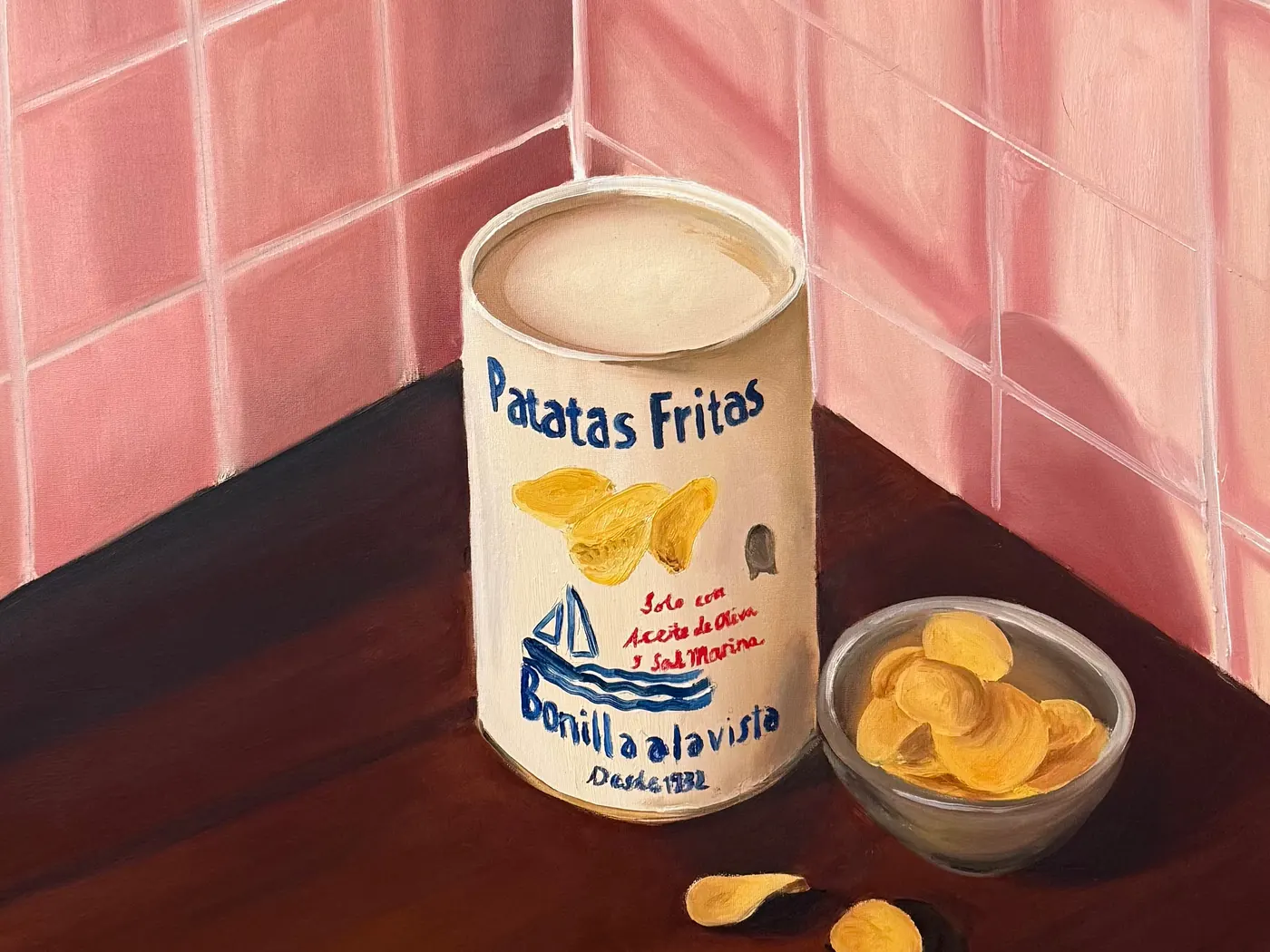 © Nerea Amondarain. Source: namondar.wixsite.com
What we see as makers
A plain object can carry the whole piece if the light is doing the composing. Amondarain does not reach for a dramatic subject. A snack tin and a biscuit tin are the entire cast, and the raking light across tile and cushion supplies the drama instead. A tufter stuck for a motif can pick something this ordinary and spend the effort on how it is lit and framed rather than on finding something more “artistic.”
A name in your own language turns a generic object into a specific memory. Amama is just a tin of biscuits until the Basque word for grandmother is attached to it, and then it is someone’s living room. A tufter can title a hoop the same way, trading a description of the motif for the word that actually explains why it was made.
A year is enough time to show resolved work. Amondarain picked up oil painting in November 2024 and already has finished, exhibition-ready pieces on her site. A tufter weighing whether they are “ready” to show a piece can treat that timeline as the actual bar, not an exception.
The drip connection
Amondarain controls every edge in these paintings. The rim of a tin stays exactly where her brush puts it, and the shadow across the sofa holds its line precisely. Jan Fechner’s drip tufting, developed at BUBU Studio, starts from the opposite instinct: he lets one colour of wool run into the next as the gun moves, with no outline underneath to answer to. Her still lifes earn their calm by holding light steady. Jan’s work earns its energy by letting colour move on its own.
Curious what an ordinary object looks like once it is tufted instead of painted? Book a session in Paphos.
Sources: Artist website, About and gallery pages, namondar.wixsite.com/nereaamondarainart.
Try it with yarn in your hands.
Tufting workshops in Paphos, every week.